

Vending Operators6 min read
On this page
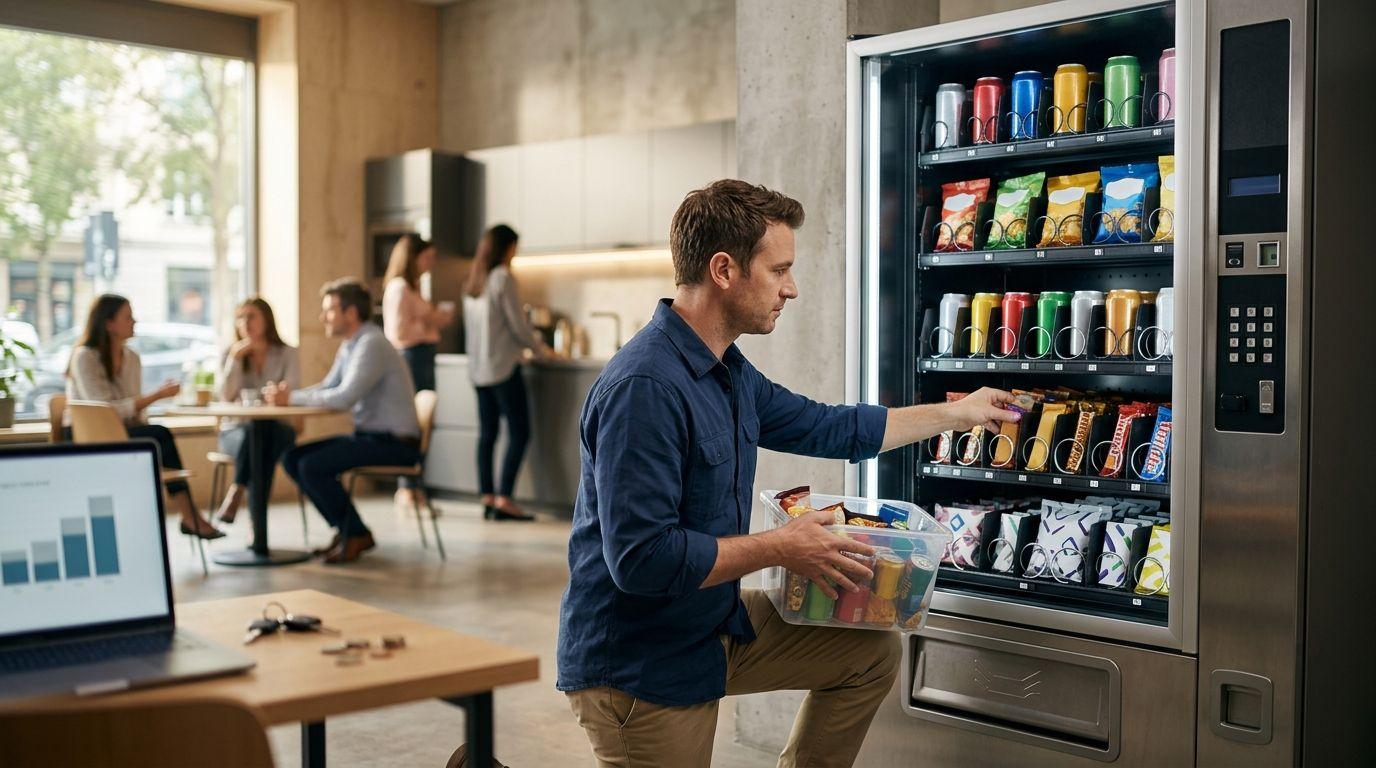
Yes, you can run a vending machine business part-time. The IRS does not set a minimum number of hours for a side venture to count as a business; it applies a profit-motive test, and self-employment tax filing kicks in once net earnings reach $400 in a year under IRS Schedule SE rules. The catch is that "part-time" describes your hours, not the machine's obligations: Restocking, cash or cashless reconciliation, and location upkeep have to happen on the site's schedule, not yours.
TL;DR- A part-time vending machine business is legal; the IRS uses profit-motive rules, not hour minimums, to define a real business.
- Self-employment tax filing applies once net earnings hit $400 in a year under IRS Schedule SE.
- Route size, machine type, and restocking cadence, not a fixed weekly schedule, determine how much time the work actually takes.
- Licensing, tax registration, and business banking rules apply the same whether you run one machine or twenty.
Why This Matters
A lot of people ask whether vending qualifies as a "real" business if they're only checking machines a few hours a week around a full-time job. It does, but the classification depends on intent and paperwork, not clock hours. The IRS treats a one-machine route the same way it treats a fifty-location fleet for tax purposes: Both are judged on whether the operator is trying to make a profit.
That distinction matters because licensing offices, banks, and tax authorities don't have a part-time category. A route with two machines still needs a business license in most cities, still needs sales tax registration in states that tax vending sales, and still needs its own accounting trail separate from personal finances. The vending machine licensing guide on The Vending Club covers how those requirements apply at different route sizes.
Can You Run a Vending Machine Business Part-Time?
The honest answer is that part-time works for machine count and hours logged, but not for the tasks themselves. Restocking has to happen before a machine runs empty, cash has to get counted and deposited, and cashless terminals need periodic reconciliation regardless of your day job's schedule. Here's how the considerations differ by route size:
| Factor | Single machine or two | Multi-machine route |
|---|---|---|
| Restocking cadence | Flexible, fits around other commitments | Fixed by consumption speed at each site |
| Bookkeeping | Manageable with a spreadsheet | Usually needs dedicated software or a bookkeeper |
| Licensing | One business license, possibly one health permit | Licensing and permits can multiply per jurisdiction |
| Location relationships | Direct, informal check-ins | Needs a written service agreement per site |
| Time per week | Predictable, low | Scales with machine count and location traffic |
A vending machine business run part-time is closer to a managed side project than a passive investment. The machines don't run themselves; the operator's job is to keep the servicing cycle tight enough that customers don't hit empty slots.
Single-Machine Part-Time Routes
One or two machines is the entry point most part-time operators start from, often in a single office, gym, or small retail location. At this scale, restocking and cash handling fit into an evening or a weekend stop, and formal route management software is optional rather than necessary.
The tradeoff is thin margins per stop. A single machine generates revenue tied directly to that one location's foot traffic, so a slow month at the host site is a slow month for the whole business. Operators at this stage still need to register the business, open separate banking (see do vending owners need a separate business bank account), and track expenses for tax purposes, even if the volume is small.
Multi-Machine Part-Time Routes
Operators running five, ten, or more machines part-time are managing a route, not a hobby. This is where telemetry and remote monitoring start to matter, since checking every machine in person before a shift becomes impractical. The vending route management guide on The Vending Club covers how growing fleets structure restocking schedules and service windows.
At this scale, part-time usually means the hours are compressed into efficient blocks (one long restocking run, one day for bookkeeping) rather than spread evenly across the week. The administrative load, sales tax filing, location agreements, insurance, doesn't shrink just because the operator has a day job; it just gets scheduled tighter.
“The IRS applies the same profit-motive test to a one-machine route as it does to a fifty-location fleet.”
Why Time Commitment Varies
How much time a part-time vending machine business actually takes depends on a handful of factors, not the operator's intent alone:
- Machine type. Snack and beverage machines need routine restocking; bulk and claw machines run on longer cycles; fresh or frozen food machines require tighter turnaround for food safety.
- Location foot traffic. A high-traffic break room empties a machine faster than a low-traffic waiting area, which changes how often a stop is needed.
- Number of locations. Driving between sites, not restocking itself, often eats the most time on a multi-location route.
- Payment technology. Cashless terminals cut down on cash-collection trips but add a reconciliation step to bookkeeping.
- Service agreements. A site with a written service-level expectation (see what should a full-service vending agreement include) sets a schedule the operator has to meet, part-time or not.
- Downtime tolerance. How much downtime is considered normal for a vending machine affects how quickly a repair call has to happen, which can conflict with a day job's schedule.
Compare Operator Resources
Templates, calculators, and state guides for vending operators at any route size.
Read the starter guideHow Many Vending Machines Can One Person Manage Part-Time?
There's no fixed number that applies to every operator, since the answer depends on machine type, location spread, and how much driving time sits between stops. An operator servicing two machines within walking distance of each other has a very different workload than an operator with two machines an hour apart. Route management practices, not a headcount rule, are what determine whether a given number of machines still fits into part-time hours.
Do You Need a Business License to Run Vending Machines Part-Time?
In most jurisdictions, yes, a general business license or vending-specific permit applies regardless of how many hours the operator puts in each week. Some states and counties add machine-specific fees, health permits for food and beverage machines, or per-unit decals. Requirements vary by state and by machine type, so checking the licensing rules for the specific location and product category before placing a machine avoids a compliance problem later.
Is Vending Machine Income Considered Self-Employment Income?
Yes, net earnings from a vending machine business count as self-employment income once they reach $400 in a year, which is the threshold IRS Schedule SE uses to require filing. That applies whether the operator runs one machine on weekends or a ten-machine route worked in the evenings; the tax treatment doesn't change based on hours logged, only on net profit. Operators can review write-off rules for equipment purchases on the vending machine tax write-off guide.
One Last Thing
The part that catches new operators off guard isn't the hours, it's the paperwork cadence. Sales tax filing deadlines, license renewals, and location agreement terms run on their own calendars whether the business is a side project or a full-time operation. Building a simple checklist for renewal dates and filing deadlines up front avoids the most common part-time vending mistake: Missing a deadline because the business felt too small to track formally.
Related Guides
- Vending machine licensing for veteran operators
- Can you write off a vending machine purchase on your taxes
- Do vending machine owners need a separate business bank account
Get new vending guides in your inbox
The Vending Club publishes new operator guides most days. The free General Updates newsletter goes out every Friday with the week's new articles, and nothing else. You choose the updates you want, we confirm by email before sending anything, and you can unsubscribe at any time.
Sources
- Internal Revenue Service, "Self-Employment Tax (Social Security and Medicare Taxes)" (2026): https://www.irs.gov/businesses/small-businesses-self-employed/self-employment-tax-social-security-and-medicare-taxes
- Internal Revenue Service, "Here's how to tell the difference between a hobby and a business for tax purposes" (2026): https://www.irs.gov/newsroom/heres-how-to-tell-the-difference-between-a-hobby-and-a-business-for-tax-purposes
Common questions
- Can a part-time vending machine business be considered a hobby by the IRS?
It can if the operator doesn't run it with a profit motive. The IRS looks at factors like recordkeeping, effort to improve profitability, and whether the activity turns a profit in at least 3 of 5 years to tell a business apart from a hobby.
- How do you choose how many machines to start with part-time?
Start by matching machine count to available restocking hours and driving distance between sites, since travel time between locations, not the machines themselves, is usually the limiting factor for a part-time schedule.
- Do you need a separate bank account for a part-time vending machine business?
Separating business and personal finances is standard practice for any registered business, part-time or full-time, and makes tax filing and expense tracking cleaner. The specific requirements can depend on the business structure chosen.
- Is vending machine income taxed differently if it's part-time?
No, the IRS doesn't tax part-time vending income differently from full-time vending income. The same $400 net-earnings threshold for self-employment tax filing applies either way.
- How much does licensing cost for a part-time vending route?
Licensing costs vary by city, county, and state, and by whether the machines dispense food, beverages, or non-food items. Checking local licensing offices directly gives the current fee schedule for a specific location.
- Can you run vending machines part-time while employed full-time elsewhere?
Yes, many operators run vending machines alongside another job, since restocking and servicing can be scheduled around other commitments as long as the machines stay stocked and functional between visits.
- How do you handle machine downtime when working part-time?
Downtime gets handled the same way regardless of schedule: Telemetry alerts or regular check-ins flag a problem, and the operator or a service provider addresses it before it affects revenue for too long.
- Do part-time vending operators need insurance?
Insurance needs depend on the location agreement and the machine type, and many host locations require proof of liability coverage before allowing a machine on site, regardless of how many hours the operator works.