

Guide43 min read
On this page
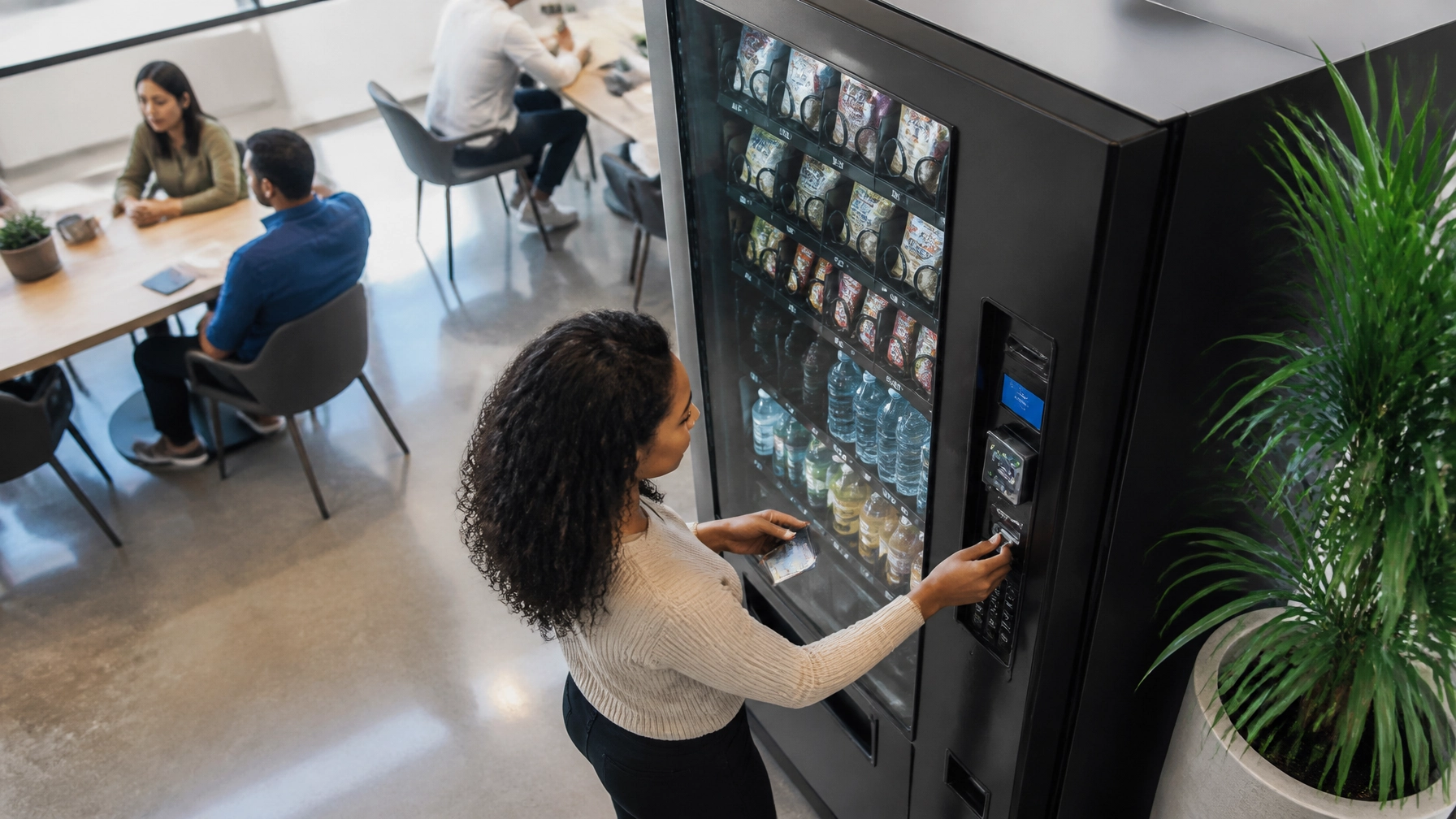
The vending industry in 2026 is no longer about just "chips and soda" in a dark corner. It has transformed into a high-tech, data-driven sector of retail that rewards efficiency and community connection over raw machine count. According to IBISWorld, US operator revenue stands at $7.9B annually, a significant figure, yet only a fraction of the broader $31.1B unattended retail market reported by NAMA.
For the modern entrepreneur, the opportunity lies in bridging that gap. Whether you are looking to build a side hustle or a scalable enterprise, the path to a profitable route requires more than just buying a machine. It requires a foundational understanding of location math, equipment lifecycle, and the operational rhythms that separate successful operators from those who exit within their first year. This guide synthesizes the core pillars of the industry to help you build a sustainable operation from the ground up. This guide gives you the big picture—but for a day-by-day breakdown with actionable worksheets and real operator stories, check out our free Operator Foundations 15-day email series. And when you hit an unfamiliar term—planogram, telemetry, par level—TVC’s free Vending Glossary defines 150+ of them in plain language.
$7.9BUS vending operator revenue$31.1BTotal unattended retail market2.0–3.5xSDE valuation multipleCommon Questions
Last updated: August 2026
Best vending equipment for high traffic locations
For a high-traffic site, select equipment on four criteria rather than on brand: vend capacity and selection count sufficient to survive a full service cycle without sellouts, MDB-compatible cashless readers, remote telemetry so restocking runs on sales data instead of guesswork, and parts and service availability in your own region. High-traffic accounts usually justify a larger-capacity combo unit, or a separate snack and beverage pair, over a single small combo — the real cost of a mid-week sellout is the lost sales plus an unplanned service trip. Work through the full criteria in How to Choose Vending Equipment, and compare capacities and footprints in the Vending Machine Model Spec Lookup.
Choosing who supplies the product rather than the machines? See How to Choose a Vending Product Supplier for distributor types, account minimums, and the questions to ask before opening an account.
Launching Your Operation with Zero Capital
One of the most common misconceptions in the industry is that you need five figures in the bank to start. While capital accelerates growth, many of the most successful members of The Vending Club started by being resourceful, finding creative ways to secure equipment and locations without heavy upfront investment.
If you want the line-item numbers first, see our companion breakdown of how much it costs to start a vending machine business.
If you are starting from zero, the main objective is simple—control access to revenue before you own a lot of hardware. In practical terms, that means finding locations, structuring deals, and protecting cash flow so the business begins to fund itself.
Here are the most realistic zero-capital or near-zero-capital paths operators use in 2026.
Seller Financing
Many retiring operators want an exit, but the buyer pool is smaller than people think. A new operator with hustle and organization can often win the deal by offering a clean transition, reliable servicing, and a payment plan tied to actual route performance.
A seller-financed structure often looks like this:
- You acquire 5 to 20 machines already on location
- You pay little or nothing upfront
- The seller receives monthly payments from route cash flow
- You agree on a fixed term, often 12 to 36 months
- The seller may keep title to the equipment until the note is fully paid
A simple example:
- Route monthly sales — $4,500
- Cost of goods sold at 45% — $2,025
- Gross margin before fuel, fees, and labor — $2,475
- Route net cash flow after routine expenses — about $1,300
- Monthly seller payment — $700
- Remaining owner cash flow during payoff period — about $600
That is not a huge spread, but it gets you into an operating business without writing a large check on day one.
What to ask a seller before agreeing
- How many machines are currently active versus sitting in storage
- Which locations are under written contract
- Average monthly sales by machine for the last 6 to 12 months
- Age, model, and payment setup of each machine
- Whether any major repairs are pending
- Whether the seller will introduce you to each location manager personally
Real-world funding example
An entry-level operator might acquire 8 snack and drink machines from a retiring owner with this structure:
- Purchase price — $24,000
- Down payment — $0
- Monthly payment — $800 for 30 months
- Seller support — first 2 ride-alongs included
- Condition — machines already producing about $5,200 per month in total sales
This kind of arrangement works best when the buyer is organized. You need a basic due diligence checklist, route sales records, and a written asset purchase agreement. It also helps if you can show the seller that you already understand servicing, route scheduling, and customer communication.
The Locator Hustle
Instead of buying machines first, some operators build cash by finding locations for other operators. This is one of the cleanest ways to learn the market because it trains you to identify decision-makers, assess site quality, and spot weak accounts before you spend money.
A typical arrangement is simple:
- You prospect local businesses
- You secure interest from the decision-maker
- You pass the lead or signed placement agreement to an established operator
- You collect a placement fee, usually $300 to $600 per location
If you secure 4 paid locations in two months at $450 each, that is $1,800 in seed capital. In many markets, that is enough to purchase your first refurbished snack machine or cover the deposit and opening inventory for a combo machine deal.
How to make the locator path work
Focus on accounts that are easy to service and easy to close:
- Auto shops
- Small warehouses
- Light industrial buildings
- Office breakrooms with 20 to 75 employees
- Community recreation sites
- Laundromats with long dwell time
Before you promise a location to anyone, confirm four things:
- Who signs off on vending
- Headcount on site per shift
- Breakroom access and available electrical service
- Whether another operator already has exclusivity
Real-world funding example
A new entrant spends 6 weeks calling 80 local businesses and visiting 25 in person. They secure 3 locations for an established operator at $500 each. The $1,500 earned is used for:
- $900 refurbished snack machine deposit
- $350 inventory
- $250 hand truck rental, moving supplies, and business registration
The hidden benefit is that this operator also learns which types of businesses respond fastest to outreach, which gives them a sharper edge when they begin placing their own equipment.
0% APR Business Credit
Introductory business credit can be useful, but only when the paydown plan is specific. This strategy is dangerous if you use it to buy a machine first and hope sales appear later. It is much safer when you already have a placement lined up and you know roughly what that machine should produce.
A responsible structure looks like this:
- Secure the location first
- Buy a dependable refurbished machine
- Add only the equipment that the site can support
- Set a payoff target well before the promotional APR period ends
- Avoid carrying unrelated business or personal spending on the same card
Real-world funding example
An operator opens a 15-month 0% APR business card and uses it for:
- Refurbished combo machine — $2,700
- Card reader install and setup — $425
- Opening inventory — $375
- Moving and install — $300
Total financed — $3,800
If the machine generates $850 in monthly sales, and the operator nets about $250 to $300 after product, fees, and servicing costs, the machine may not fully retire the balance inside 15 months by itself. That means the operator either needs stronger volume, a lower machine cost, side income from another route, or a larger monthly payment from outside the machine's earnings.
That is why zero-interest credit works best as a bridge, not as a blind bet.
Equipment Partnerships
A fourth path that more operators are using is partnership-based placement. In this model, the location provides traffic, you provide servicing, and the machine is supplied by a third party or a local route owner looking to expand.
You might structure the deal in one of these ways:
- A machine owner places equipment in your secured location and pays you a monthly management fee
- A route owner and you split profits on a site you sourced
- A local supplier helps finance the machine if you commit to buying product volume from them
This path is especially useful if you are strong at business development but not yet ready to own and maintain multiple units.
Small Service Businesses That Fund the Route
If your true goal is machine ownership, one of the fastest ways to self-fund it is to start with a service line that requires less capital than equipment ownership.
Examples include:
- Placement outreach for operators
- Vending machine cleaning and cosmetic refresh services
- Inventory restocking support for busy route owners
- Light machine moving coordination
- Card reader retrofit assistance if you have technical ability
These are not glamorous, but they create cash and relationships. In many markets, relationships matter more than your first machine.
How to decide which zero-capital path fits you
Use this quick filter:
- If you are strong at sales and phone outreach, start with location acquisition
- If you are organized and comfortable with due diligence, look at seller financing
- If you already have decent credit and one strong location, consider 0% APR equipment financing
- If you know operators locally, partnership placements may be the fastest route
Starter case study
A starter operator in a midsize market wants to enter vending without savings. They spend one month securing two breakroom opportunities. One is handed to a local operator for a $400 locator fee. The second is used to justify buying a refurbished combo machine on a 12-month 0% APR card for $2,900 all-in. The machine does $780 a month in sales at launch and grows to $1,050 after product optimization and card acceptance. That first location does not create instant freedom, but it builds a track record, weekly operating habits, and enough credibility to pitch larger sites.
Success in the early stages is less about owning a fleet and more about controlling risk, proving reliability, and following a clear operating plan. That is where a solid free vending machine business plan template can help you map your first five machines.
Avoiding the Five Most Expensive Mistakes
The first 1,000 days of a vending business are the most dangerous. Most failures are not caused by bad luck. They are caused by predictable, avoidable errors that drain cash flow before the business can scale.
Garage Syndrome
Many new operators buy a machine before they have a location. This is Garage Syndrome—your capital is tied up in a piece of equipment sitting in storage, depreciating and earning zero.
Why it happens
- A machine looks like a bargain on Marketplace or at auction
- New operators want to feel like they are making progress
- They assume a location will be easy to find later
What it really costs
If you spend $2,500 on a refurbished machine and it sits for 4 months, you are not just losing time. You are also risking:
- Battery and board issues from improper storage
- Cosmetic wear while moving it around
- Lost opportunity to use that $2,500 on outreach, inventory, or a better machine tied to an active site
Troubleshooting tip
If you already bought the machine before securing a placement, do this immediately:
- Photograph and list exact machine specs
- Measure width, height, depth, and power needs
- Build a target list of 25 locations that fit that machine type
- Offer a 30-day trial placement if appropriate
- Set a hard deadline—if it is not placed by then, resell it and reset
The key is to stop compounding the mistake. A fast resale at a small loss is often cheaper than indefinite storage.
The Sidewalk Surprise
Never buy a machine without measuring the path it must travel. The Sidewalk Surprise happens when you arrive for install and realize the machine will not fit through the entrance, elevator, hallway turn, or breakroom door.
Common misses
- Front door width is fine, but interior breakroom door is narrower
- Elevator weight limit is too low
- Flooring or ramp access creates moving problems
- Delivery path includes a tight turn near a stairwell or pillar
Troubleshooting tip
Create a standard pre-install checklist:
- Exterior door width
- Interior door width
- Hallway clearance
- Elevator dimensions and weight limit
- Distance from unload point to final placement
- Available outlet type and dedicated power if needed
- Floor condition and any access restrictions
Ask the location manager for photos and a quick video walk-through before move day. That one habit can save hundreds in failed delivery charges.
The Handshake-Deal Trap
Operating without a written contract is the fastest way to lose a location. A handshake deal gives you little protection if management changes, the building is sold, or a competitor promises a bigger commission.
What your agreement should cover
- Equipment ownership
- Exclusivity
- Commission terms if any
- Service frequency
- Removal notice period
- Damage and liability language
- Product approval and pricing rights
- What happens if the site closes or remodels
Troubleshooting tip
If you are already operating without a contract, do not panic. Convert the informal relationship into a service review conversation.
Use language like this:
We have enjoyed serving your staff, and I want to make sure we keep everything clear and consistent going forward. I put together a simple service agreement that outlines service frequency, equipment responsibility, and commission terms so there is no confusion for your team or future management.
That approach feels professional rather than confrontational.
Pricing by Feeling
Operators often set prices based on emotion, local guesses, or fear of complaints. In reality, pricing should follow a margin model.
In 2026, the industry standard is the 2x floor, meaning your retail price should generally be at least double cost. In stronger locations, a 3x target is common, especially for convenience items, premium beverages, and small-format snack packs.
Example
If a product costs you $1.05 landed, pricing it at $1.50 may feel friendly, but it often fails after card fees, spoilage, tax handling, and commission. At $2.25, the same item has room to support the route.
Troubleshooting tip
If a location complains about prices:
- Pull the sales mix report
- Identify the top 10 items by velocity
- Keep 2 to 3 value-price items visible
- Raise low-velocity premium items first
- Recalculate after card fees and commission
- Test pricing changes for 30 days, not 3 days
Price resistance is often less severe than operators expect. Poor product mix causes more complaints than smart pricing does.
The Cash Trap
Ignoring the Cash Trap means failing to account for the hidden costs of cash—coin handling time, change shortages, bank trips, theft exposure, and reconciliation errors.
Cash can still matter in specific settings, but operators often underestimate the labor attached to it.
Hidden cost example
A machine doing $500 per month in mostly cash sales may require:
- Extra collection visits
- Manual counting and balancing
- Bank deposit runs
- More on-site troubleshooting for bill validators and coin mechs
That labor can quietly erase margin.
Troubleshooting tip
If a machine is still cash-heavy:
- Track the percentage of cash versus card sales for 60 days
- Compare service time on cash-heavy units versus card-dominant units
- Reduce denominations accepted if theft or change drain is frequent
- Add signage for card tap if cashless is available but underused
- If location volume supports it, push customers toward cashless through convenience, not pressure
The goal is not to eliminate cash everywhere. It is to understand whether cash is making you money or creating work that looks like money.
Mid-scale case study
A mid-scale operator with 18 machines believed they had a product pricing problem. After review, the real issue was a mix of three expensive mistakes at once—two unwritten location relationships, four underpriced machines, and a beverage unit that was being serviced too often because cash collection was inefficient. By correcting agreements, adjusting pricing on only 12 SKUs, and moving one weak machine to card-first service, the operator improved monthly net profit by more than $1,100 without adding a single new location.
The Art of Reading a Location
A machine is only as good as the feet walking past it. When evaluating a potential spot, you are looking for more than raw foot traffic. You are looking for a captive audience, repeat exposure, and strong dwell time.

A captive audience refers to people who cannot easily leave the premises to find food elsewhere—think of a warehouse during a 15-minute break, a manufacturing plant on second shift, or a hospital waiting room at 2:00 AM. Dwell time is how long people stay near the machine. A lobby where people walk through quickly is often less profitable than a breakroom where employees stay for 20 to 30 minutes.
Start with the traffic, then qualify the traffic
Traffic counts by themselves can be misleading. One hundred employees in a tight production environment can outperform 250 people in a professional office where everyone leaves for lunch.
When scoring a site, ask:
- How many people are on site per shift
- How many shifts operate each day
- How often are people allowed to leave
- Is there a cafeteria, convenience store, or delivery culture nearby
- Are there night or weekend workers with fewer food options
- Is the breakroom central or hidden
- Are visitors part of the buying audience or just pass-through traffic
The basic conversion math
A common first-pass estimate is a 1% to 3% purchase rate against daily traffic exposure. That gives you a rough operating range, not a guarantee.
Here is a simple baseline:
- 100 people exposed daily
- 1% to 3% convert
- 1 to 3 transactions per day
- At a $2.00 average ticket, that is roughly $2.00 to $6.00 per day
That math is useful, but it is too thin for a real decision. You need multiple scenarios.
Scenario 1 — Small office breakroom
35 employees, single shift, nearby fast food within 5 minutes, staff still take two short breaks. Average ticket $2.25, estimated 3 to 6 daily transactions.
Monthly estimate over 22 workdays: 3 sales per day is about $148.50; 6 sales per day is about $297. This is borderline for a full-service machine if you are adding a card reader. It may work better as a combo machine with minimal SKUs or as part of a clustered route.
Scenario 2 — Warehouse with two shifts
90 employees day shift, 55 employees night shift, limited nearby food access, structured short breaks. Average ticket $2.75, estimated 12 to 22 daily transactions.
Monthly estimate over 26 operating days: 12 sales per day is about $858; 22 sales per day is about $1,573. This is a much stronger account. Captive audience plus second shift usually outperforms a prettier office with more total headcount.
Scenario 3 — Apartment common area
180 units in the complex, residents come and go freely, machine near laundry or mail area. Average ticket $2.50, estimated 4 to 10 daily transactions.
Monthly estimate over 30 days: 4 sales per day is about $300; 10 sales per day is about $750. This kind of account can work, but only if placement is excellent and servicing is efficient. A weak apartment placement often turns into a low-volume time drain.
Scenario 4 — Hospital waiting area
Heavy daily foot traffic, emotional impulse purchases, long dwell time, 24-hour environment. Average ticket $2.75 to $3.50, with daily transactions varying widely depending on access and competition.
These sites can be strong, but they often involve tougher approval processes, vendor insurance requirements, and stricter service expectations.
Use the contribution test, not just top-line sales
Do not ask only whether the machine can sell. Ask whether the location contributes enough margin after all costs.
A practical screening formula:
Monthly sales
minus cost of goods
minus commission
minus card fees
minus estimated service labor
minus route fuel allocation
equals contribution margin
Example
A machine does $700 per month.
- Cost of goods at 45% — $315
- Commission at 10% — $70
- Card and tech fees estimated at 5% blended — $35
- Service labor allocation — $90
- Fuel allocation — $30
Estimated contribution margin — $160. That may be acceptable if the machine is on a dense route and the equipment is already paid off. It may be unacceptable if it requires a long out-of-the-way stop.
Red flags that make location math worse
- Breakroom hidden from actual traffic
- Staff mostly bring lunch from home
- Free employer-provided snacks
- Competing kiosk or micro market nearby
- Decision-maker overstates headcount
- Building has seasonal occupancy swings
- Only one strong buying window per day
- Site requires excessive security check-in or service restrictions
Green flags that improve location math
- Multiple shifts
- Long dwell time
- Limited food competition
- Blue-collar or on-feet workforce
- Visitor traffic plus employee traffic
- Night and weekend operation
- Nearby electrical outlet and easy service access
- Willingness from management to support placement and communicate availability to staff
How to pressure-test a site before committing
If the numbers are close, do one of these:
- Ask for a 60-day trial period
- Start with a combo machine instead of two full-size units
- Limit initial SKU count and track sell-through tightly
- Visit the site twice—once during day shift and once during evening or break periods
- Ask how prior vending performed and why it left
Established operator case study
An established operator reviewing a 42-machine route found that one polished corporate lobby machine was doing only $240 monthly despite high visible traffic. A nearby industrial account with far fewer people was doing $1,180 monthly because employees had nowhere else to buy snacks during second shift. The lesson was simple—high traffic is not the same as high conversion. Route growth improved once the operator started scoring locations based on access, break patterns, and dwell time instead of appearances alone.
This kind of analysis is the foundation of every strong vending service operator operation. The best sites are not always the most obvious ones.
Contracts and the Commission Range
Commissions are the rent you pay to stay in a location. While some locations will demand a cut of the sales, many strong accounts—especially employee breakrooms—view vending as an amenity and may not require a commission at all.
The standard commission range in the US is 0% to 15%. Anything above 15% usually puts pressure on margin once you account for card reader fees, spoilage, and service labor. That does not mean you should never pay above that number, but it does mean you should model the account carefully before agreeing.
When 0% commission makes sense
Zero-commission locations are common when:
- The site sees vending as a convenience benefit for employees
- The account is smaller and mainly wants reliable service
- Management has had poor experiences with broken or empty machines
- The buyer values ease and consistency over squeezing out a small revenue share
When a commission is reasonable
A commission may be appropriate when:
- The location has high volume and strong competition for placement
- The site has visitor traffic or premium access
- The account is using vending revenue for staff events or building funds
- The decision-maker expects a formal vendor program
Quick math before saying yes
If a machine does $1,200 monthly in sales, a 10% commission is $120 per month. Over a year, that is $1,440. If your route margin is already tight, a seemingly small commission can materially change whether the machine is worth servicing.
Use this basic check:
- Monthly sales
- Minus cost of goods
- Minus card fees
- Minus commission
- Minus service labor and fuel
- Equals actual contribution
If the location still contributes well, the commission may be justified. If not, the account may only look good from the outside.
Negotiation principles that work
When discussing commission, lead with service standards instead of jumping straight to percentages. Most location managers care about four things:
- Machines stay in stock
- Equipment works consistently
- Prices stay reasonable
- Problems are handled quickly
Position your offer around those points.
Commission conversation script for a new location
We usually structure breakroom accounts around reliable service first. That means clean machines, strong in-stock rates, and fast response if there is ever an issue. Depending on employee count and expected volume, some accounts work well with no commission because the vending service itself is the benefit. If volume supports it, I can also quote a commission structure that still allows me to keep pricing fair and the machines well maintained.
If the manager asks for a percentage immediately
I can absolutely talk through that. Before I give you a number, I want to make sure I am pricing it around real volume and service expectations. If the location supports strong, consistent sales, I may be able to offer a commission in the standard 0% to 15% range. I just do not want to overpromise something that would force bad pricing or poor service later.
If the requested commission is too high
I understand why you are asking for that. The challenge is that once commission, product cost, and card processing stack up, the service quality usually suffers unless prices go higher than either of us wants. I would rather give you a better employee experience with dependable service than agree to a percentage that makes the account unstable.
If you want to trade commission for better terms
If keeping employee prices competitive is important, one option is to reduce or remove commission in exchange for a longer agreement term and basic exclusivity. That lets me invest in better equipment and keep the location serviced properly.
Renewal conversation script
I wanted to review performance with you now that the machines have been in place for a while. Sales have been steady, service calls are low, and I would like to keep improving product mix. If you are happy with the service, I would like to renew under the same structure so we can keep things stable for your staff.
Contract terms that matter most
Every vending agreement should clearly define:
- Term length
- Renewal structure
- Commission percentage and payment timing
- Exclusivity
- Service schedule expectations
- Restocking and maintenance access
- Removal rights and notice period
- Insurance requirements if any
- Pricing flexibility
- Ownership of equipment
Negotiation mistakes to avoid
- Offering a high commission before you know the volume
- Agreeing to commission on gross sales without clear reporting rules
- Locking in unrealistic prices to win the account
- Ignoring route distance and service friction
- Accepting verbal promises instead of a signed agreement
Well-negotiated contracts protect both sides. A location manager wants confidence. You want economic clarity. Good commission terms balance both.
Before you buy your first machine, run the numbers. The free Vending Profitability Calculator projects monthly profit, annual earnings, and break-even timeline for any machine and location you are considering — and the State Vending Guides cover licensing, sales tax, and registration rules for every state.
Try the Profitability CalculatorBrowse the State GuidesEquipment Selection and the 50/50 Rule
Choosing between new and refurbished equipment is a balancing act of capital, reliability, and serviceability. New machines come with warranties and current payment compatibility, but they cost significantly more. Refurbished machines often offer a faster return on investment, but they require more inspection and mechanical awareness.
The 50/50 Rule suggests that your first few machines should usually be late-model refurbished units. This keeps entry costs lower while ensuring parts are still widely available. Avoid very old machines with obsolete control boards, motors, or validator interfaces. What looks cheap upfront can become expensive fast when the wrong part fails.
What matters more than the sticker price
When evaluating a machine, focus on five factors:
- Can it reliably take modern payment hardware
- Are parts easy to source
- Is the cabinet still presentable for commercial placement
- Can your target location support its footprint and power needs
- Will expected sales justify the machine type
A $1,500 machine that breaks repeatedly can cost more over 18 months than a $3,500 machine that runs cleanly with fewer service calls.
New versus refurbished in practical terms
New equipment
Pros:
- Factory warranty
- Current firmware and board compatibility
- Cleaner cabinet appearance
- Better fit for premium locations
- Easier integration with cashless hardware
Cons:
- Higher upfront cost
- Longer ROI period if location volume is average
- More financial pressure if a site underperforms
Typical ranges in 2026:
- New snack machine — $4,000 to $7,000
- New beverage machine — $4,500 to $8,000
- New combo machine — $4,500 to $7,500
Refurbished equipment
Pros:
- Lower purchase price
- Faster payback in solid accounts
- Easier to test market fit with less capital
- Often ideal for early route building
Cons:
- Cosmetic quality varies
- Repair history may be unclear
- Warranty may be limited or nonexistent
- Older units may need validator or reader upgrades
Typical ranges in 2026:
- Refurbished snack machine — $1,800 to $3,500
- Refurbished beverage machine — $2,000 to $4,000
- Refurbished combo machine — $2,200 to $4,000
Brand and machine-type comparison
Rather than framing this as one brand against another, think in terms of use case and service profile.
AMS
Often favored for strong snack capacity and solid field familiarity. Operators like them because parts and technician knowledge are relatively common in many markets. They can be a practical fit for standard snack placements and mixed commercial environments.
Crane National
Well-known legacy presence with broad market familiarity. Depending on model age, these can be dependable workhorses, but buyers should pay close attention to board generation, cosmetic condition, and cashless compatibility before purchase.
Wittern family models
Common in combo and snack formats. These can be good entry points when late-model and well refurbished. The key is checking the exact machine generation and whether the configuration fits your target account rather than buying on brand name alone.
Seaga and economy-positioned options
These may appeal to first-time buyers because of pricing. The right machine can still work, but operators should inspect cabinet durability, vend consistency, and long-term parts support with extra care.
Choose by environment
Use this practical guide:
- Small office or tight floorplan — combo machine
- Warehouse with strong beverage demand — separate snack and drink if volume supports it
- Apartment or common-area site — compact combo or focused beverage setup
- Premium office or hospital account — cleaner late-model machine or new equipment
- Trial placement — refurbished combo to control risk
Lifecycle cost matters more than purchase price
Think in 3-year ownership cost, not day-one cost.
Example A — cheap older machine
- Purchase price — $1,400
- Reader retrofit — $450
- Validator issue in month 4 — $325
- Motor replacement in month 9 — $180
- Two failed service trips and labor loss — $220
- Cosmetic cleanup and decals — $150
3-year practical cost before major failure risk — around $2,725
Example B — better late-model refurbished machine
- Purchase price — $3,100
- Reader install — $425
- One minor repair in year 1 — $125
3-year practical cost — around $3,650
The second machine costs more, but if it produces fewer headaches, fewer missed sales, and better location retention, it may be the better buy.
Equipment inspection checklist
Before buying, confirm:
- MDB compatibility for modern payment systems
- Compressor, cooling, and vend function if applicable
- Coin mech and bill validator condition
- Cabinet rust, dents, and glass quality
- Tray motors and selection buttons
- Lighting and display operation
- Lock and key integrity
- Serial plate and model identification
- Availability of replacement parts
If possible, see the machine powered on and running a test vend.
Delivery and installation budget
Operators often under-budget install costs. Include:
- Moving labor
- Liftgate delivery if needed
- Stair or tight-access surcharges
- Reader installation
- New lock or rekeying
- Initial cleaning and setup
- Opening inventory
- Decals or basic branding if appropriate
A machine priced at $2,800 can easily become a $3,700 deployed asset by the time it is earning money.
Equipment mix strategy for the first 10 machines
A practical early-stage approach might look like:
- Machines 1 to 4 — late-model refurbished combos or snack units
- Machines 5 to 7 — best-performing locations get cleaner, stronger equipment
- Machines 8 to 10 — begin matching machine type more tightly to location demand and route density
That is the logic behind the 50/50 Rule. Protect cash early, then upgrade based on proven location performance instead of guesswork.
The Reality of Cashless Payments
In 2026, a machine without a card reader is usually a machine that is leaving money on the table. However, cashless comes with its own math. Card reader fees typically range from 3% to 6% per transaction, plus monthly service fees and setup costs depending on the provider and hardware.
The $300 threshold rule is a useful benchmark. If a machine is doing less than $300 in monthly sales, the fixed monthly cost of a reader may eat too much of the margin. Above that level, adding cashless capability often creates a 20% to 35% sales lift because it captures buyers who no longer carry cash and increases convenience for repeat users.
Why cashless usually wins
Cashless does more than process cards. It can improve the route in multiple ways:
- Fewer lost sales from no-cash customers
- Faster checkout for impulse purchases
- Better sales visibility through telemetry
- Easier dispute handling and refund tracking
- Lower cash-handling time on service days
The cost stack to model
Before adding cashless, estimate:
- Reader hardware cost
- Installation cost
- Monthly device fee
- Processing rate
- Any gateway or platform fees
- Chargeback exposure
- Data visibility value if the system includes telemetry
Example of the math
Machine monthly sales before reader — $500
Expected lift after reader — 25%
Projected monthly sales after reader — $625
If blended cashless fees and platform costs land around 5%, that is about $31.25 monthly on $625 in sales, plus any fixed monthly device fee. If the machine also becomes easier to service because you can see stockouts and cashless activity remotely, the operational benefit may justify the cost even beyond pure sales lift.
When to add a reader immediately
Add cashless from day one when:
- The location is an office, hospital, school-adjacent site, or professional environment
- Most users are younger or mobile-payment oriented
- You expect over $300 in monthly sales
- You want telemetry visibility from the start
- The location manager expects modern convenience
When you might delay a reader
You may delay briefly when:
- The machine is below the $300 monthly threshold
- The site is experimental and unproven
- The machine itself may be replaced soon
- Connectivity at the site is unreliable and unresolved
Even then, revisit the decision quickly. Many low-volume machines stay low-volume because the payment setup is outdated.
Real-world deployment example
A combo machine in a small manufacturing account was doing $420 monthly as a cash-heavy unit. After a reader was added, monthly sales rose to $610 over the next 60 days. Fees increased, but service time dropped because fewer coins needed to be processed and the operator could better spot top-selling items. In another account doing only $190 monthly, the reader still did not make sense yet. Same technology, different economics.
Cashless is not magic. It is a tool. In the right account, it improves both revenue and route control.
Cash Flow and Route Valuation
Understanding your numbers is what separates a hobby from a business. The primary metric for route valuation is SDE, Seller's Discretionary Earnings. This is the total profit the business generates for the owner after all operating expenses but before taxes and interest.
When it comes time to sell or buy a route, the industry standard valuation multiple is 2.0x to 3.5x SDE. A route that generates $50,000 in annual SDE is typically worth between $100,000 and $175,000, depending on the age of the equipment and the strength of the contracts.
Before you buy your first machine, pressure-test your assumptions with TVC’s free Vending Profitability Calculator — it turns the cost and pricing figures in this guide into a monthly cash-flow estimate.
Working with Locator Services
If you don't have the time to knock on doors, professional locator services can jumpstart your growth. These services charge a fee, usually $300 to $600, to find a business willing to host your machine.
When vetting a locator, watch for red flags like "guaranteed income" or "minimum traffic" promises. A reputable locator will provide you with the name and contact info of the decision-maker and allow you to inspect the site before you pay. The best locators are often found through the communities mapped in the Vending Community Guide, where other operators share their experiences.
Tax Foundations for Operators
Vending is a capital-intensive business, which makes tax strategy important from the beginning. Many operators start as sole proprietors for simplicity and later move into an LLC structure as they scale and want cleaner liability separation. The exact structure depends on your state, your income level, and advice from your tax professional, but the operational principle is the same—track everything cleanly from day one.
The three basic tax habits that matter most
Before getting fancy, lock in these fundamentals:
- Separate business and personal banking
- Track every equipment purchase, repair, mileage run, and inventory order
- Keep digital copies of invoices, route expenses, and sales reports
Most tax problems in vending do not come from missing advanced tactics. They come from weak records.
Section 179 in plain English
One of the most useful tools available to operators is Section 179, an IRS provision that may allow you to deduct the full purchase price of qualifying equipment in the year it was placed in service rather than depreciating it over several years.
That means if you buy qualifying vending equipment and put it into active service this year, you may be able to deduct the cost this year, subject to your tax situation and eligibility limits.
Real-world Section 179 examples
Example 1 — first machine purchase
An operator buys:
- Refurbished combo machine — $3,200
- Card reader and installation — $425
- Delivery and placement costs that are capitalized appropriately depending on accounting treatment
If the machine qualifies and is placed in service this year, much or all of the equipment cost may be deductible under Section 179 instead of being spread over multiple years.
Example 2 — route expansion year
A growing operator purchases:
- 4 refurbished snack machines at $2,800 each — $11,200
- 2 beverage machines at $3,600 each — $7,200
- Reader hardware across all 6 units — $2,550
Potential qualifying equipment total — $20,950
If the business has enough taxable income and the assets qualify, Section 179 may allow a major current-year deduction, which can improve after-tax cash flow during growth.
Example 3 — established operator warehouse upgrade
An established operator adds:
- 10 machines
- Warehouse shelving
- Route tablets and operational hardware that may qualify depending on category and use
This is where working with a qualified CPA becomes especially important because equipment class, placed-in-service dates, and entity-level tax planning all matter.
Important Section 179 reminders
- Equipment generally must be placed in service during the tax year, not just ordered
- Deduction limits and taxable income limitations apply
- State treatment may differ from federal treatment
- Not every cost is handled the same way
- Good records make the deduction easier to support
Other deductions operators should understand
Beyond equipment purchases, operators often track deductions related to:
- Mileage or actual vehicle expenses
- Repairs and maintenance
- Inventory and supplies
- Merchant processing fees
- Insurance
- Storage or warehouse rent
- Phone and software
- Professional fees
- Business licensing
- Internet and route technology
Sales tax discipline matters
Depending on your state and local rules, vending sales tax handling can be straightforward or surprisingly messy. Do not guess. Make sure you understand:
- Whether vending sales are taxable where you operate
- Whether tax is included in posted vend prices or added differently
- Filing frequency
- Exemption rules for specific items if applicable
A lot of avoidable pain comes from collecting money in the machine and not reserving enough for tax filings later.
Entity strategy as you scale
Many operators evolve through stages:
- Stage 1 — sole proprietor with basic bookkeeping
- Stage 2 — LLC for liability separation and cleaner contracts
- Stage 3 — deeper entity review once route profit becomes meaningful
The right time to revisit structure is often when:
- You are adding employees or contractors
- You are acquiring a route
- You are taking on debt
- Net income is high enough that tax planning becomes more valuable
Practical bookkeeping checklist
Every month, reconcile:
- Machine sales deposits
- Cash collections
- Card processing reports
- Inventory purchases
- Fuel and mileage
- Commissions paid
- Repairs
- Equipment purchases and placements
If you cannot tie sales activity back to bank activity and route logs, your books are not ready for growth.
A practical warning
Section 179 is powerful, but it is not free money. It is a timing tool. If you buy weak equipment just to chase a deduction, you still spent the cash. Make equipment decisions based on route economics first, then use tax strategy to support the business.
For operator-specific guidance, work with a qualified tax professional who understands small business equipment, depreciation, and local sales tax rules.
Scaling Past The Wall
Every operator eventually hits The Wall—the point where there are too many machines to manage casually, but not yet enough free cash flow to build a fully staffed team. Crossing that wall requires a shift from doing everything yourself to building repeatable systems.
This is when Standard Operating Procedures become essential. You need a warehouse, even if it is just an organized storage unit at first, to manage inventory efficiently. You also need to move operations out of your garage as soon as practical so the business has cleaner inventory control, safer storage, and a more professional setup for future hires.
Signs you are approaching The Wall
- You are forgetting fills, refunds, or product reorders
- Your route depends on memory instead of written process
- You are making too many emergency service runs
- Stock is spread across your house, van, and garage
- You cannot take a day off without sales or service quality dropping
What scaling really requires
Growth is not just more machines. It is more control over:
- Inventory
- Route planning
- Equipment maintenance
- Cash handling
- Communication with locations
- Training for anyone who helps you
SOP template for weekly route prep
Use a written checklist like this:
- Pull sales and stock data from each machine
- Build restock list by route day
- Pick product in advance by machine
- Load van in stop order
- Confirm tools, spare coils, reader keys, and cleaning supplies
- Review service notes from prior visits
- Text or email any site that needs scheduled access
SOP template for machine service visit
- Check machine exterior and cleanliness
- Test payment acceptance
- Verify sold-out selections
- Refill based on planogram and current velocity
- Remove stale or damaged product
- Check for pricing errors
- Confirm refrigeration and display status
- Log any maintenance issue before leaving
- Take a quick photo if the site had an issue worth documenting
SOP template for new location onboarding
- Confirm signed agreement
- Verify install path and power access
- Document manager contact info
- Capture headcount and shift schedule
- Install machine and test all payment options
- Stock opening mix based on location profile
- Explain refund contact process
- Set first review date at 30 days
- Revisit product mix after first sales cycle
SOP template for refund handling
- Capture date, machine, and issue
- Confirm whether product dispensed
- Issue refund quickly through your chosen process
- Log machine and selection involved
- Look for repeated failures on that slot or payment path
- Escalate recurring issues to maintenance review
Fast refund handling protects location trust.
When to hire part-time help
Most operators should consider part-time support before full-time hiring. Good first hires often help with:
- Restocking prep
- Warehouse organization
- Basic route servicing
- Machine cleaning
- Product receiving
Keep their role narrow at first. Scale complexity only after the process is stable.
Mid-scale operator case study
A mid-scale operator grew from 11 machines to 27 in 14 months. Revenue rose, but profit lagged because route prep was chaotic and emergency service consumed extra hours. Once the operator standardized route-day loading, labeled warehouse shelves by SKU family, and created a one-page service checklist, weekly labor time dropped significantly. The route did not become easy overnight, but it became manageable.
Established operator case study
An established operator with more than 50 machines found that growth had created a hidden inventory problem. Product was being overbought because there was no formal reorder rhythm. By shifting to weekly purchasing targets, documented minimum stock levels, and location-specific planograms, stale inventory fell and purchasing became more accurate. The scaling breakthrough was not another machine. It was process discipline.
Scaling is where vending turns from an owner-operated hustle into an actual company. The sooner you document repeatable work, the easier it becomes to add people without creating confusion.
The Ecosystem and The Vending Club
No operator is an island. The vending industry relies on a complex ecosystem of suppliers, technicians, and fellow operators. This is why The Vending Club exists, to serve as the community hub where you can find vetted partners and real-time advice.
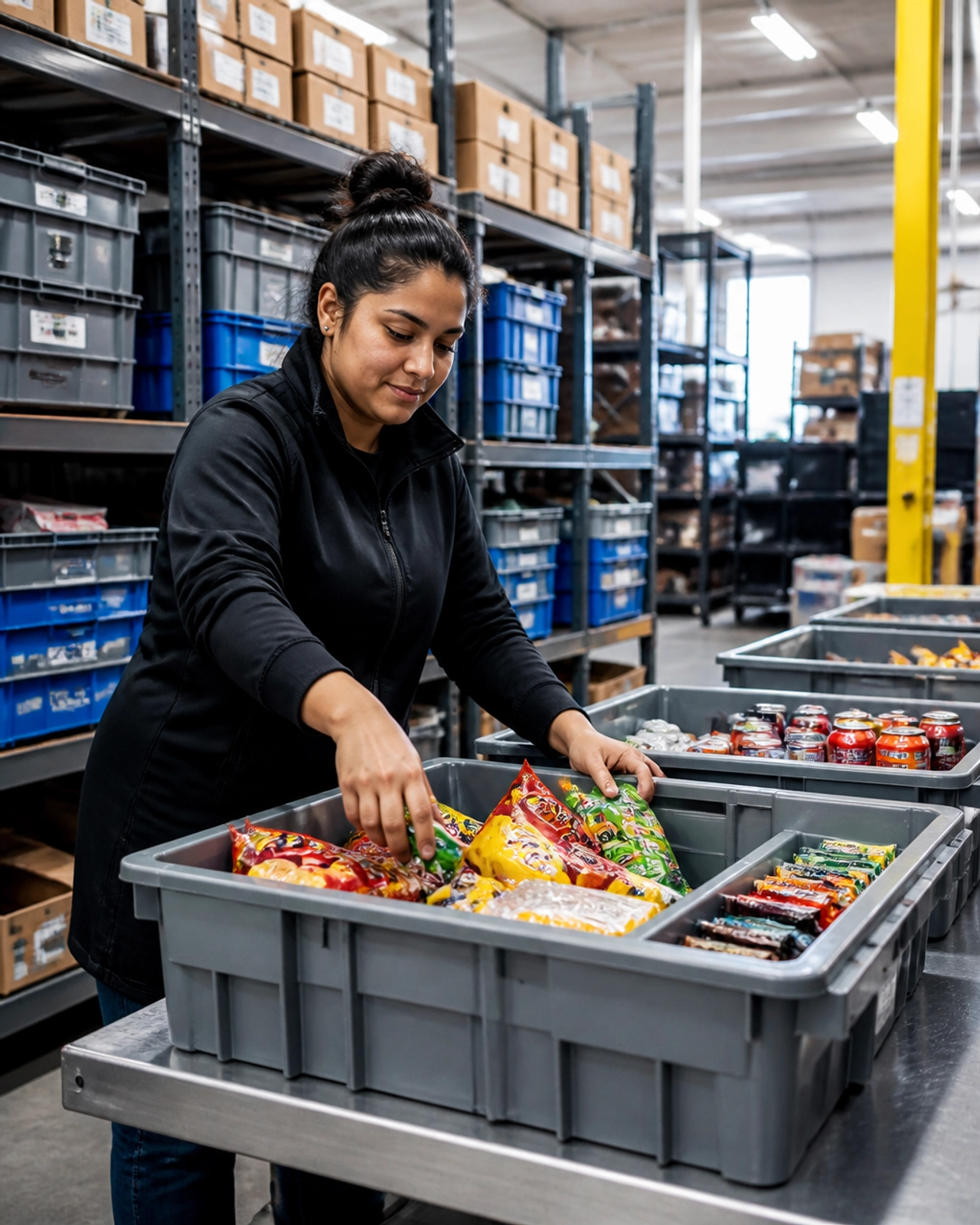
Participating in the movement of community-driven knowledge helps you avoid the isolation that leads to burnout. Whether it's finding a technician for a rare model or negotiating a better rate with a drink supplier, the collective intelligence of the club is your greatest asset.
The Quarterly Audit
Success is not a set-it-and-forget-it endeavor. You need a quarterly audit to identify operational leaks before they become permanent margin loss.
Step 1 — Check for shrinkage
Compare inventory purchases against machine sales and service logs.
Detailed steps:
- Pull three months of purchase records
- Pull three months of machine sales data
- Compare expected unit movement versus actual replenishment
- Identify high-loss SKUs and locations
- Check for spoilage, expired product, or unexplained stock gaps
- Review whether employees or third parties have unsupervised access to stock
- Rework planograms if low-turn items keep expiring
Step 2 — Audit route fuel and travel time
Do not just review gas spend. Review total route friction.
Detailed steps:
- Map every stop by drive time
- Identify outlier locations that require long detours
- Compare each location's monthly contribution margin to travel time
- Combine weak nearby stops on the same day if possible
- Flag any machine that is taking more service effort than its sales justify
- Decide whether to optimize, relocate, or remove poor performers
Step 3 — Recheck the pricing floor
Wholesale costs change. If you are not auditing pricing, margins can slip quietly.
Detailed steps:
- Pull current wholesale cost for top-selling items
- Compare current vend prices against landed cost
- Verify that pricing still respects at least a 2x floor where needed
- Recalculate after commission and card reader fee impact
- Raise low-velocity premium items first if margin is compressed
- Review customer complaints alongside actual sales data before making reversals
Step 4 — Verify contracts and renewals
A route is only as strong as its paperwork.
Detailed steps:
- List every active location
- Confirm there is a signed agreement on file
- Check renewal dates and notice windows
- Confirm commission terms still match what is being paid
- Verify manager contact information is current
- Flag any verbal-only account for immediate cleanup
Step 5 — Test equipment condition
A machine can still be selling while quietly deteriorating.
Detailed steps:
- Test payment acceptance on each machine
- Inspect refrigeration where applicable
- Check lighting, display, locks, and cabinet condition
- Review repeated refund or jam patterns
- Schedule preventive repairs before failure becomes urgent
- Identify any machine that is no longer worth repairing
Step 6 — Review product mix by location
The wrong mix creates dead stock and missed sales.
Detailed steps:
- Pull top and bottom sellers by machine
- Remove or reduce chronic slow movers
- Add more facings to proven products
- Match products to the actual workforce or visitor profile
- Check whether higher-ticket drinks or healthier options are gaining traction
- Update slot assignments if there is frequent sellout in top selections
Step 7 — Review location relationships
Quarterly audits should include human contact, not just spreadsheets.
Detailed steps:
- Ask each key manager whether service levels are meeting expectations
- Confirm there are no new access rules or construction plans
- Ask whether employee count has changed
- Note any upcoming changes in shift structure
- Reinforce your response process for refunds or machine issues
Step 8 — Review route-level profitability
Look at the route as a portfolio, not just as individual machines.
Detailed steps:
- Rank locations by contribution margin
- Separate anchors from marginal stops
- Identify machines below your minimum acceptable threshold
- Decide whether to reprice, relocate, swap machine type, or prune
- Set action items for the next quarter
A quarterly audit gives you a cleaner business, stronger margins, and fewer surprises. It is one of the most important habits in route ownership.
Route Efficiency and The Operator Rhythm
Efficiency is the difference between a high-stress job and a high-profit business. Modern operators use telemetry, remote monitoring software, to practice dynamic pre-kitting. Instead of bringing the whole van of snacks into a building, you know exactly what the machine needs before you even leave your warehouse.
You should also practice "pruning." If a machine is underperforming, don't be afraid to pull it. A machine doing $150 a month is taking up space and time that could be used by a $600-a-month location. Your daily, weekly, and monthly habits should focus on high-yield activities rather than just "filling slots."
New to all of this? Our companion plan for your first 90 days running a vending route walks through building these habits from day one.
Frequently Asked Questions
How much does a new vending machine cost in 2026? A new glass-front snack or beverage machine typically ranges from $4,000 to $7,000. High-end smart machines can exceed $10,000 depending on features and payment setup.
How much does a refurbished vending machine cost? A late-model refurbished machine often falls between $1,800 and $4,000 depending on type, condition, and whether cashless hardware is included.
Can I start with just one machine? Yes. Many operators start with one well-placed machine to learn inventory, pricing, servicing, and location management before expanding.
Can I run a vending business while working a full-time job? Yes. Most operators begin part-time and service machines on evenings, early mornings, or weekends. The key is route density and reliable scheduling.
Do I need a special license to start? Requirements vary by state and city. In many areas, you will need a basic business license and a sales tax permit. Some places require additional health or food-related compliance.
How much money do I need to start? Some operators start with several thousand dollars, but others enter through seller financing, 0% APR credit, or location-finding services that generate seed capital first.
Can I really start with zero capital? It is possible, but usually through structured deals rather than pure cash-free ownership. Seller financing, partnerships, or paid location sourcing are the most realistic paths.
What are the most profitable items to sell? Beverages often deliver strong margins and reliable turnover. Energy drinks, bottled water, sports drinks, and proven snack staples usually lead most locations.
How often should I service my machines? High-traffic accounts may need service several times a week. Many standard office or light industrial accounts work on a weekly rhythm.
What is the best way to find locations? Direct outreach remains one of the strongest strategies. You can also use locator services carefully, referrals, or relationships built through the communities in the Vending Community Guide.
What makes a good vending location? Strong locations usually have a captive audience, meaningful dwell time, limited nearby food alternatives, and enough traffic to justify service and payment costs.
How many employees should a location have before I place a machine? There is no universal minimum, but many operators look for 30 to 50 people on site as a rough starting point, then adjust based on shift structure and nearby competition.
Should I pay a commission to every location? No. Many employee breakrooms do not require one. The typical commission range is 0% to 15%, and it should be modeled against real route economics.
What happens if a location asks for more than 15% commission? You should review the full economics before agreeing. Some premium accounts can support higher terms, but many cannot without pushing prices too high or weakening service quality.
Do I need a contract with every location? Yes. A written agreement protects you, clarifies expectations, and reduces risk if management changes.
How do I price products correctly? Start with your landed item cost, then account for card fees, spoilage, commission if any, and service labor. A 2x floor is a common minimum, with 3x often used in stronger environments.
Should every machine have a card reader? Not always on day one, but most machines above the $300 monthly sales threshold should be evaluated for cashless quickly. In 2026, customer expectation strongly favors card and tap payment.
How much do card reader fees usually cost? Card reader fee ranges typically fall between 3% and 6% when blended with related processing and platform costs, plus monthly device fees in many setups.
How much sales lift does cashless usually create? Many operators report a 20% to 35% lift once cashless is added in the right location, though results vary by site profile.
What is a realistic ROI for a single machine? A solid refurbished machine in a good location may pay back in 12 to 18 months. New machines often take longer, sometimes 24 to 36 months depending on volume and financing.
What is Garage Syndrome? It is when you buy a machine before securing a location and end up tying up capital in idle equipment that produces no revenue.
What is Seller's Discretionary Earnings? Seller's Discretionary Earnings, or SDE, is a common metric used to evaluate route profitability. It reflects what the business generates for the owner after operating expenses but before taxes and certain owner-specific adjustments.
How are vending routes valued? Routes are commonly valued at about 2.0x to 3.5x SDE, with the final multiple influenced by contract strength, equipment quality, route density, and earnings consistency.
Should I buy a route or build one from scratch? It depends on your capital, skills, and risk tolerance. Buying a route can accelerate cash flow if the numbers are real and the contracts are solid. Building from scratch gives you more control but takes longer.
Is the vending industry dying? No. Traditional cash-only models have declined, but unattended retail continues to expand. NAMA places the unattended retail market at $31.1B.
How important is route density? Very important. Two good machines close together are often better than three average machines spread across a wide service area.
How do I know when to remove a machine? If the machine stays below your minimum contribution threshold after pricing, product, and service adjustments, it may be time to relocate or remove it.
What records should I keep from day one? Track sales, inventory purchases, mileage, machine repairs, commissions, agreements, reader fees, and all equipment purchases.
How does Section 179 help vending operators? If you buy qualifying equipment and place it in service during the tax year, Section 179 may allow you to deduct the full purchase price that year, subject to tax rules and eligibility.
Should I form an LLC right away? Some operators do, while others start simpler and transition later. Entity choice should match your liability concerns, growth plans, and tax advice.
Do I need insurance? In many cases, yes. Some locations require general liability coverage before approving a machine installation.
What is the best machine type for beginners? A late-model refurbished combo machine is often a practical starting point because it reduces risk and fits smaller locations well.
What should I ask before buying a used machine? Ask about model number, age, repair history, payment compatibility, parts availability, and whether you can test it powered on.
How often should I review my route financially? At minimum, monthly for core numbers and quarterly for deeper profitability, pricing, contract, and inventory audits.
Can vending become a full-time business? Yes. Many operators begin part-time and scale into a full operation once route density, margins, and systems are strong enough.
Building Your Future in Vending
Starting a vending machine business in 2026 is an exercise in operational discipline. It is a business of pennies that turns into a business of thousands through consistency and smart scaling. By avoiding common traps like the Handshake-Deal Trap and Garage Syndrome, and by leaning into the support of a professional network, you can build a route that becomes a genuine financial asset.
The journey from your first machine to a full route requires constant learning and adjustment. As unattended retail continues to modernize, operators who understand location math, equipment lifecycle, pricing discipline, and route systems will have a clear advantage.
If you want the fastest learning curve, do not build in isolation. Use the Vending Community Guide — TVC's curated map of the industry's active communities — to connect with operators, suppliers, and other people actively working through the same decisions.
Explore the Vending Community Guide
Ready to put this guide to work? Everything below is free for operators:
Model your first machine’s profit · Check your state’s vending rules · Ask the TVC AI Assistant anything about vending
Keep reading
- Starting with No MoneyA realistic path into vending without upfront capital: financing options, used equipment, and revenue-share arrangements.Read the guide
- Finding LocationsHow operators find and win high-traffic locations: outreach scripts, qualification criteria, and agreement basics.Read the guide
- Route ValuationWhat a route is actually worth: multiples, due diligence checklists, and the red flags that change a valuation.Read the guide