

Vending Operators7 min read
On this page
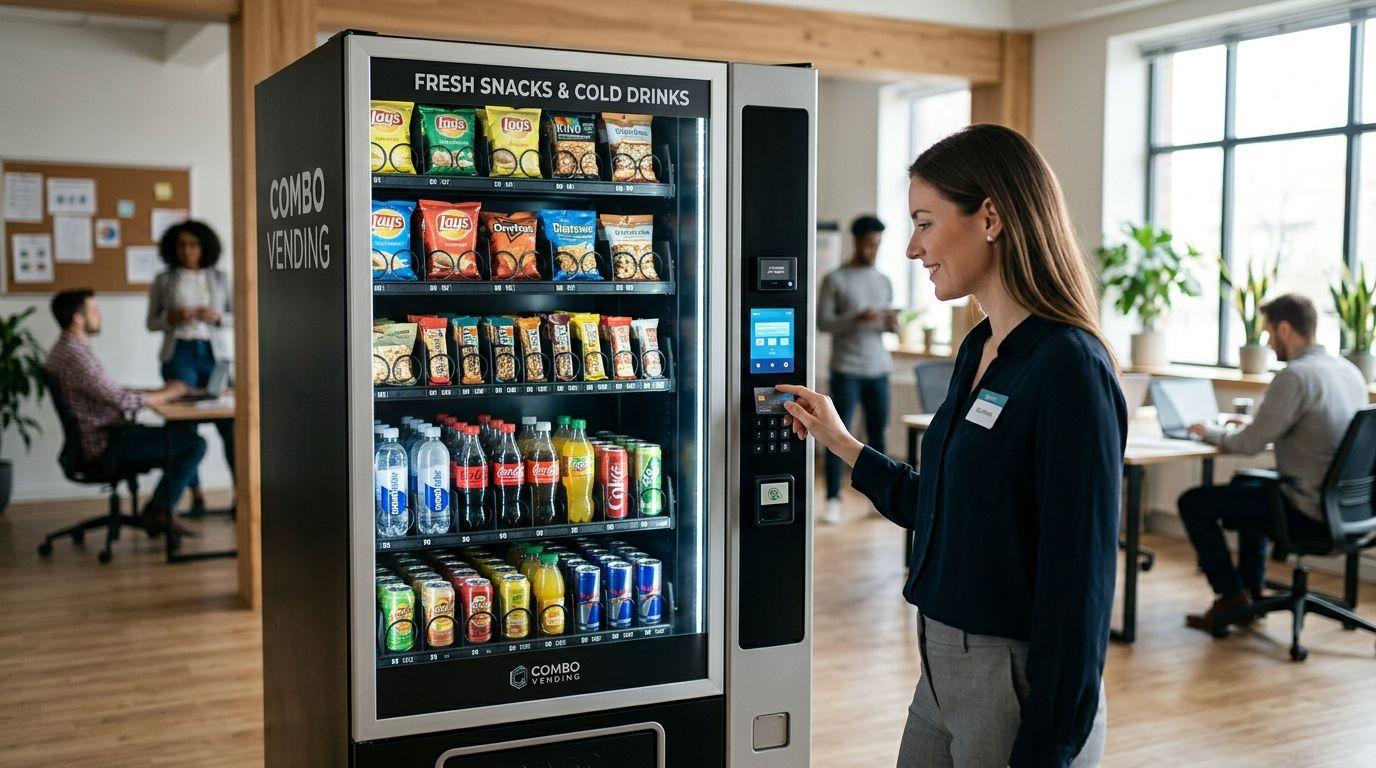
Combo vending machines put snacks and drinks in a single cabinet, which is why small businesses with limited floor space look at them before buying two separate machines. This guide breaks down the categories operators actually compare in 2026 and the factors that decide which category fits a given location, without naming a single "best" machine or vendor.
TL;DR- Combo vending machines for small businesses combine snack and drink dispensing in one cabinet to save floor space.
- Compact, freestanding, refrigerated, and high-capacity are the four combo categories operators compare in 2026.
- Refrigerated combo units run compressors continuously and need reliable power more than ambient-only machines do.
- Financing, insurance, and tax treatment change the real cost of a combo machine more than the unit price alone.
Why this matters
A small business choosing a vending machine usually has one shot at the decision: A break room, a lobby, or a shop floor with room for one unit, not two. Picking the wrong combo category means either running out of cold drink slots by mid-shift or wasting cabinet space on inventory nobody buys. Operators researching options can browse profiles and tools through the free operator directory at The Vending Club before committing to a category or a supplier.
Combo machines also carry different maintenance and power needs than single-category machines, which matters more for a small business without an in-house facilities team. The rest of this guide walks through the four combo categories operators commonly compare, the tradeoffs of each, and the practical questions to ask before signing a purchase or lease agreement. Other combo configurations exist beyond these four, and specifications vary by manufacturer, so treat this as a starting framework rather than a complete catalog.
Factors to weigh before choosing a combo vending machine
- Available floor space and doorway clearance. Measure the full delivery path against the exact model dimensions; cabinet width, depth, and weight vary by machine.
- Product mix the location actually wants. Snack-heavy break rooms need different slot ratios than gyms or waiting rooms that lean toward cold drinks.
- Power availability. Refrigerated combo units need continuous power, but voltage and current requirements vary by model. Compare the site circuit with the manufacturer’s nameplate and installation instructions.
- Restocking frequency you can commit to. A high-capacity machine reduces trips but ties up more cash in inventory sitting on the shelf.
- Financing and insurance terms, since a combo machine purchased on credit carries different total cost than one bought outright.
- Tax treatment of the purchase, which affects the real first-year cost more than most buyers expect.
Combo vending machine categories at a glance
| Category | Typical fit | Standout feature | Key limitation |
|---|---|---|---|
| Compact countertop combo | Tight break rooms or small waiting areas | Smallest footprint of the four categories | Limited slot count restricts product variety |
| Freestanding ambient combo | Offices with moderate, steady foot traffic | Holds mixed snacks and bottled drinks without refrigeration | No cold beverage capability |
| Refrigerated combo | Locations needing perishable or cold drink options | Combines ambient and chilled compartments in one cabinet | Needs continuous power and more service visits |
| High-capacity combo | Warehouses, factories, and multi-shift sites | Largest inventory capacity before restocking | Larger footprint and heavier delivery logistics |
Compact countertop combo machines: A fit for tight break rooms
Compact countertop combo units sit on an existing counter or small stand rather than the floor, which is why they show up in small offices and single-shift break rooms. They typically carry fewer slots than freestanding models, so the product mix has to be chosen carefully.
Compact combo pros:
- Smallest footprint of the four categories
- No dedicated floor space required
- Lower delivery and installation complexity
Compact combo cons:
- Limited number of product slots
- Not built for high-volume, high-traffic locations
- Little room to expand the product mix later
Typical fit: small offices, single-shift break rooms, and waiting areas with light foot traffic.
Freestanding ambient combo machines: A fit for steady-traffic offices
Freestanding ambient combo machines hold a wider mix of snacks and shelf-stable or bottled drinks without a refrigeration unit. They fit standard vending machine footprints and work well in office buildings where foot traffic is steady but not constant.
Freestanding ambient combo pros:
- Wider slot count than countertop units
- Simpler mechanically since there is no compressor to maintain
- Lower ongoing power draw than refrigerated models
Freestanding ambient combo cons:
- No cold beverage capability
- Product mix limited to shelf-stable items
- Still requires dedicated floor space
Typical fit: offices and common areas that want variety without the maintenance load of refrigeration.
Refrigerated combo machines: A fit for cold drink and perishable demand
Refrigerated combo units combine an ambient compartment for snacks with a chilled compartment for drinks or perishable items, running the compressor continuously to hold temperature. That continuous draw is why power availability at the install site matters more here than with the other categories.
Refrigerated combo pros:
- Covers both snack and cold drink demand in one cabinet
- Can stock perishable items ambient-only machines cannot
- Reduces the need for a second, separate cooler unit
Refrigerated combo cons:
- Requires reliable, continuous power
- More moving parts means more potential service calls
- Heavier unit, which affects delivery and placement options
Typical fit: gyms, medical offices, and any location where cold drinks or perishables are a core part of demand.
High-capacity combo machines: A fit for multi-shift, high-traffic sites
High-capacity combo machines carry more total inventory than the other three categories, which reduces restocking trips at locations running multiple shifts. The tradeoff is a larger footprint and more cash sitting in unsold inventory between restocks.
High-capacity combo pros:
- Largest inventory capacity of the four categories
- Fewer restocking trips needed per week
- Suited to continuous, multi-shift demand
High-capacity combo cons:
- Largest footprint, which rules out tight spaces
- More capital tied up in on-hand inventory
- Heavier delivery and installation logistics
Typical fit: warehouses, factories, and any site running more than one shift a day.
“The right combo vending machine for a small business depends on floor space, product mix, and foot traffic, not a single best model.”
How to evaluate these categories for your specific location
Matching a category to a location starts with measuring the space, not browsing a catalog. Walk the intended spot with a tape measure, note the nearest power outlet and its rating, and count average daily foot traffic before comparing categories against the table above.
From there, the decision usually comes down to whether cold drinks or perishables are part of the demand. If they are, a refrigerated or high-capacity combo unit is the realistic starting point; if not, a compact or freestanding ambient combo covers the need at lower ongoing maintenance.
Financing, insurance, and tax treatment change the real cost
The sticker price of a combo vending machine is only part of what it costs to own. Lease and loan terms differ by lender, and comparing options through vending machine financing companies before signing shows how payment structure affects monthly cash flow.
Equipment financing terms are not unique to vending: Comparing financing your equipment purchase against options built for other commercial equipment categories can surface rate and term structures a vending-specific lender might not offer. Reviewing multiple offers before committing to one lender applies whether the equipment is a combo vending machine or a piece of restaurant kitchen equipment.
Insurance is a separate line item small business owners sometimes skip on a single machine, even though a refrigerated combo unit represents more capital at risk than an ambient-only model. Comparing vending machine insurance providers before or right after purchase is worth doing regardless of which combo category gets chosen.
Compare vending machine financing terms
Review lender options before signing a purchase or lease agreement.
Browse the supplier directoryChoosing the right combo vending machine category
A small business with a tight break room and light traffic has a different answer than a warehouse running three shifts, and that is by design rather than a gap in this guide. Compact and freestanding ambient combo units suit lower-traffic, no-refrigeration needs; refrigerated and high-capacity combo units suit sites where cold drinks, perishables, or shift volume push demand higher. Measure the space, confirm the power, and match the category before comparing individual suppliers or models, and keep in mind that categories and specifications beyond these four exist in the market.
Other providers, products, and business models exist beyond those covered here. This guide is a framework for evaluating options, not a ranking or an endorsement of any company.
One last thing
The detail small business buyers skip most often is the power circuit, not the cabinet size. Confirm the exact model’s electrical requirements and whether the intended circuit is shared with other appliances before delivery day.
Sources
- Seaga Manufacturing, "Envision 5-Wide Combo" specifications: https://seaga.com/products/glass-front-vendors/env5c-combo
- Seaga Manufacturing, "A Complete Guide to Vending Machine Relocation": https://seaga.com/a-complete-guide-to-vending-machine-relocation-2
Get new vending guides in your inbox
The Vending Club publishes new operator guides most days. The free General Updates newsletter goes out every Friday with the week's new articles, and nothing else. You choose the updates you want, we confirm by email before sending anything, and you can unsubscribe at any time.
Related guides
Common questions
- What is a combo vending machine?
A combo vending machine combines snack and drink dispensing in a single cabinet instead of running two separate machines. Small businesses use them to cover both product types in locations with limited floor space.
- Is a refrigerated combo vending machine better than an ambient combo machine?
Neither is universally better; it depends on whether the location needs cold drinks or perishable items. A refrigerated combo unit covers that demand but needs continuous power and more service attention than an ambient-only model.
- How much floor space does a combo vending machine need for a small business?
Compact countertop units need less space than full-size combo machines. Measure the intended spot and every doorway, hallway, and elevator against the exact model dimensions before ordering.
- Can a small business finance a combo vending machine purchase?
Yes, vending machine financing is available through lenders that specialize in the category as well as general equipment lenders. Comparing terms across more than one lender before signing shows the real monthly cost difference.
- Does a combo vending machine need insurance?
Combo vending machines represent capital at risk from theft, vandalism, or equipment failure, which is why many operators carry coverage on them. Comparing providers before or shortly after purchase is a common practice regardless of machine category.
- How much power does a refrigerated combo vending machine need?
Power requirements vary by model. Confirm the machine’s voltage and current rating against the intended circuit and manufacturer installation instructions before delivery.
- How often does a high-capacity combo machine need restocking?
High-capacity combo machines hold more inventory than the other three categories, which reduces restocking trips at high-traffic or multi-shift locations. The tradeoff is more cash tied up in on-hand inventory between visits.
- Can vending machine purchases be written off on taxes?
Tax treatment of a vending machine purchase depends on current federal and state rules, which change from year to year. Reviewing the specifics before filing is worth doing rather than assuming a blanket deduction applies.