

Vending Operators7 min read
On this page
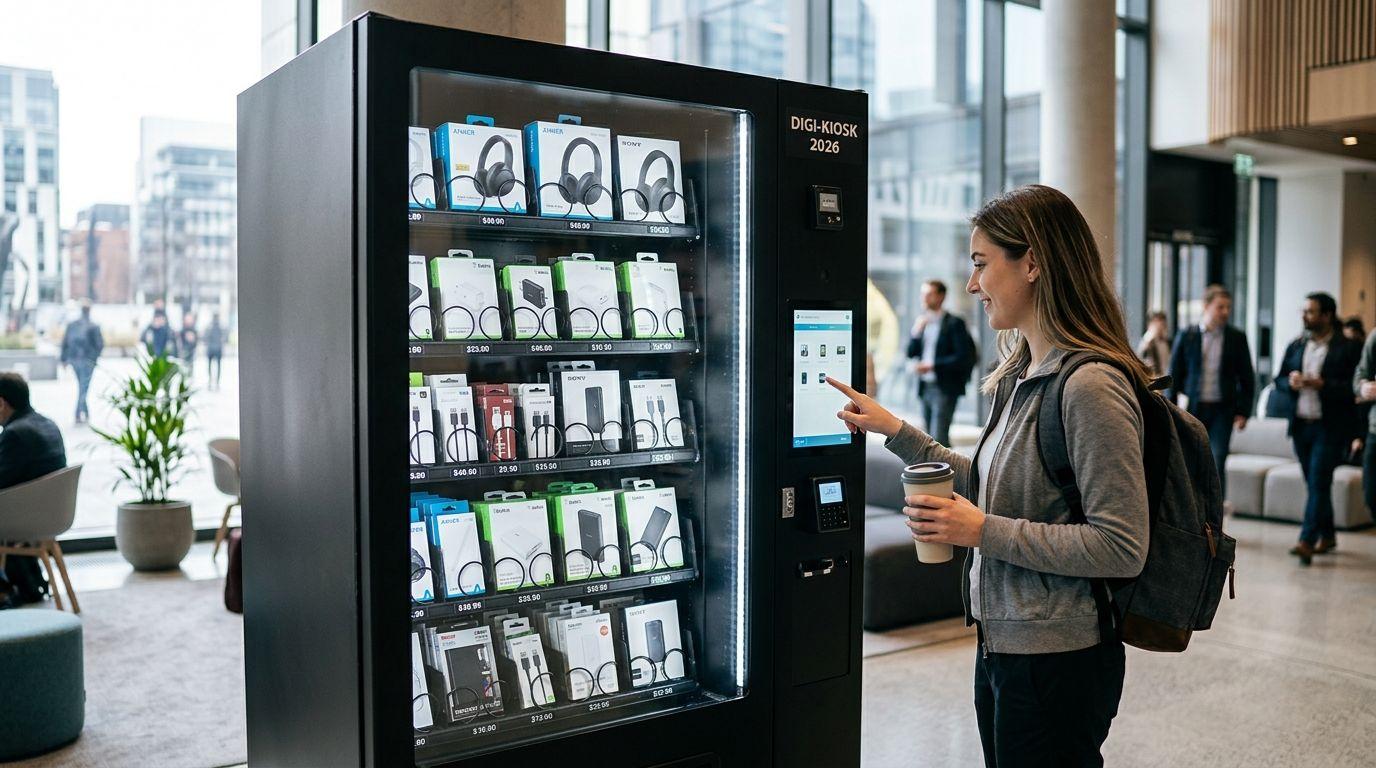
Electronics vending machines, the kind that dispense earbuds, phone chargers, gaming accessories, and similar items, are supplied through a handful of distinct business models, and the right fit depends on inventory value, machine volume, and how much support your route needs in 2026.
TL;DR- Electronics vending machine suppliers generally fall into five categories: OEMs, distributors, custom fabricators, refurbished dealers, and turnkey providers.
- Security features like RFID locks and locker-style dispensing carry more weight for electronics vending machine suppliers than for snack or drink machines because per-unit inventory value is higher.
- Financing, leasing, and insurance terms differ by supplier category and are worth comparing line by line before signing a 2026 contract.
- No single supplier category fits every operator; machine volume, product value, and post-sale support needs drive the decision.
Why this matters
A snack machine restocked with a $1.50 candy bar and a locker vending machine stocked with $40 wireless earbuds carry very different risk profiles. A jammed motor or a break-in costs a lot more when the inventory behind the door is electronics rather than chips.
That difference changes what operators should ask a supplier before signing anything. Warranty terms, lock hardware, restocking logistics, and telemetry integration all matter more once the per-unit cost climbs. The free member directory run by The Vending Club lists operator tools and state guides that cover these questions in more depth, and it's a starting point for researching options rather than a ranking of who to hire.
This guide breaks electronics vending machine suppliers into categories based on business model, not performance, and lays out what each category typically offers so you can match it to your route.
What to look for when evaluating a supplier
- Security hardware: RFID locks, locker-style compartments, and tamper alerts matter more for high-value electronics than for snack or drink vending.
- Warranty and repair terms: How long parts and labor are covered, and whether repairs happen on-site or require shipping the unit back.
- Restocking logistics: Whether the supplier handles fulfillment, or whether you source and load inventory yourself.
- Payment and telemetry integration: Whether the machine supports the cashless readers and remote monitoring systems you already use, or plan to add.
- Financing and leasing options: Whether the supplier offers in-house financing, works with third-party lenders, or requires cash purchase only.
- Minimum order quantities: Some suppliers sell single units, others require a minimum fleet order.
Electronics vending machine suppliers at a glance
| Supplier category | Typically suited to | Standout consideration | Key limitation |
|---|---|---|---|
| OEMs (original equipment manufacturers) | Operators buying direct, at volume | Manufacturer warranty and parts support | Longer lead times, higher minimum orders |
| Distributors and resellers | First-time or small-fleet electronics vending operators | Access to multiple brands through one contact | Warranty routed through manufacturer, not the reseller |
| Custom kiosk and locker fabricators | Operators needing a specific footprint or branding | Built-to-spec dimensions and compartment count | Higher cost and longer build time than off-the-shelf units |
| Refurbished and used equipment dealers | Budget-conscious operators entering electronics vending | Lower upfront equipment cost | Shorter or no warranty; unknown machine history |
| Full-service turnkey suppliers | Operators who want installation and ongoing support bundled | Location placement and restocking handled for you | Less control over machine choice and contract terms |
Other supplier categories and regional providers exist beyond the five covered here; this list is not exhaustive.
Original equipment manufacturers (OEMs)
OEMs build the vending machines themselves rather than reselling someone else's hardware. For electronics vending, this usually means locker-style or rotating-compartment machines designed around RFID locks, tamper sensors, and compartment-level inventory tracking.
OEM suppliers, pros:
- Direct line to the manufacturer for warranty claims and parts
- Machines built specifically for high-value item dispensing
- Often support telemetry integration out of the box
OEM suppliers, cons:
- Longer lead times between order and delivery
- Minimum order quantities can be higher than a single-machine route needs
- Custom branding or compartment changes may not be available
Suited to: operators scaling a multi-machine electronics vending fleet who want manufacturer-backed hardware and are willing to plan around longer lead times.
Distributors and resellers
Distributors carry machines from multiple manufacturers and act as the sales and support layer between the factory and the operator. For someone placing their first electronics vending machine, this is often the fastest way to compare a few models side by side without contacting several OEMs directly.
Distributor pros:
- One point of contact for comparing multiple brands
- Lower minimum order requirements than buying direct from an OEM
- Often stock financing or leasing partnerships already in place
Distributor cons:
- Warranty claims usually route back through the original manufacturer, adding a step
- Markup on top of manufacturer pricing
- Support quality varies by distributor, since they are not the ones who built the machine
Suited to: operators placing their first one or two electronics vending machines who want to compare models before committing to a manufacturer relationship.
Custom kiosk and locker fabricators
Some locations, like a corporate lobby or a university bookstore, need a machine built to a specific footprint, compartment count, or branded exterior. Custom fabricators design and build to that spec rather than selling a standard catalog unit.
Custom fabricator pros:
- Compartment size and count matched to your exact inventory list
- Branding and exterior finish options standard catalog units don't offer
- Can integrate specific lock hardware or payment terminals on request
Custom fabricator cons:
- Build time is longer than ordering a standard unit
- Cost is generally higher for a one-off build
- Fewer fabricators offer this service compared to standard OEMs, narrowing your options
Suited to: operators with a location that has non-standard space constraints or a client that wants a branded, purpose-built unit.
Refurbished and used equipment dealers
Refurbished electronics vending machines cost less upfront, and dealers who specialize in used equipment can be a way into the category without a large capital outlay. The tradeoff is that warranty coverage and machine history are less certain than buying new.
Refurbished dealer pros:
- Lower entry cost for testing whether electronics vending works for a given location
- Faster availability since units are already built and often in stock
- Useful for adding a second or third machine without a large new-equipment purchase
Refurbished dealer cons:
- Warranty is often shorter or nonexistent compared to new equipment
- Machine history, including prior repairs or wear on lock hardware, may not be fully documented
- Older units may not support current telemetry or cashless payment standards without retrofitting
Suited to: operators testing electronics vending on a limited budget or adding capacity without new-equipment financing.
Full-service turnkey suppliers
Turnkey suppliers bundle the machine, installation, and ongoing restocking or service into a single contract. This model shifts logistics work off the operator's plate in exchange for less control over machine selection and contract terms.
Turnkey supplier pros:
- Location placement, installation, and restocking handled under one agreement
- Fewer vendors to manage day to day
- Can be a fit for operators expanding into electronics vending without hiring additional staff
Turnkey supplier cons:
- Less flexibility to swap machine models or renegotiate individual contract terms
- Contract length and exit terms need close review before signing
- Margin is typically lower than self-managed routes since the supplier takes a cut for the added service
Suited to: operators who want electronics vending added to an existing portfolio without taking on additional day-to-day logistics.
Compare supplier options in one place
Browse operator tools and state guides before you sign a contract.
Browse the supplier directoryHow this guide is organized
The categories above are grouped by business model, not by performance or price. An OEM is not inherently a better fit than a distributor or a refurbished dealer; the fit depends on your fleet size, budget, and how much control you want over machine specs versus how much you want handled for you.
Security and payment integration deserve extra scrutiny with electronics vending machines specifically. A telemetry and remote monitoring system that flags a compartment left unlocked, or a credit card reader that logs every transaction, matters more when a single stolen item costs more than a week of snack machine revenue.
Choosing a supplier category
Start with three questions: How many machines are you placing in 2026, what's the per-unit value of the inventory, and how much of the restocking and repair work do you want to handle yourself. An operator placing one or two machines with a modest budget often lands with a distributor or a refurbished dealer. An operator scaling a fleet of ten or more locker-style machines has more reason to work directly with an OEM.
Contract terms, not brand names, should decide the choice. Compare warranty length, minimum order size, financing terms, and whether telemetry and cashless payment integration are included or added later. Suppliers and categories not covered in this guide exist as well, and it's worth checking regional or specialty providers before signing anything.
Other providers, products, and business models exist beyond those covered here. This guide is a framework for evaluating options, not a ranking or an endorsement of any company.
One last thing
If your electronics vending machines sit in a public space like a lobby, mall corridor, or transit hub, the ADA's 2010 Standards for Accessible Design set a forward reach range of 15 to 48 inches for operable controls, a detail that gets missed when operators focus on lock hardware and payment readers but skip the accessibility compliance check before installation.
Sources
- U.S. Department of Justice, "2010 ADA Standards for Accessible Design" (2010): https://www.ada.gov/law-and-regs/design-standards/2010-stds/
- National Automatic Merchandising Association (NAMA), official website: https://www.namanow.org/
- UL Solutions, official website: https://www.ul.com/
Get new vending guides in your inbox
The Vending Club publishes new operator guides most days. The free General Updates newsletter goes out every Friday with the week's new articles, and nothing else. You choose the updates you want, we confirm by email before sending anything, and you can unsubscribe at any time.
Related guides
Common questions
- How do you choose an electronics vending machine supplier?
Compare warranty terms, security hardware, minimum order size, and whether the supplier handles restocking, then match those factors to your machine count and budget. No single supplier category fits every route in 2026.
- Are electronics vending machines more expensive to insure than snack machines?
Insurance cost depends on the insurer's assessment of inventory value and theft risk, and electronics vending machines carry higher per-unit inventory value than snack or drink machines. Ask any insurance provider you're comparing how they price coverage based on inventory type.
- Do electronics vending machines need special security features?
Locker-style compartments with RFID locks and tamper alerts are common on electronics vending machines because the inventory value per compartment is higher than typical snack items. Ask suppliers what lock hardware and tamper detection ships standard versus as an add-on.
- How does financing differ between OEM and refurbished electronics vending suppliers?
OEMs more often have in-house or manufacturer-backed financing programs, while refurbished dealers may require cash purchase or work through third-party lenders. Compare financing terms directly with each supplier rather than assuming one category is cheaper overall.
- What payment systems work with electronics vending machines?
Most current electronics vending machines support standard cashless card readers, though compatibility depends on the specific machine model and manufacturer. Confirm with the supplier whether the reader you plan to use is already integrated or needs to be added.
- How do you evaluate warranty terms from a vending machine supplier?
Look at coverage length, whether parts and labor are both included, and whether repairs happen on-site or require shipping the unit back to the manufacturer. Refurbished units often carry shorter or no warranty compared to new equipment.
- Is telemetry necessary for electronics vending machines?
Telemetry is not legally required, but remote monitoring of compartment status and inventory level is more commonly used on electronics vending machines given the higher cost per stolen or malfunctioning unit. Whether it's worth the added cost depends on your machine count and location risk.
- How do you find electronics vending machine suppliers near you?
Start by identifying which supplier category, OEM, distributor, custom fabricator, refurbished dealer, or turnkey provider, fits your budget and fleet size, then search for providers in that category serving your region. Trade directories and state-level operator resources can help narrow the list.