

Vending Operators9 min read
On this page
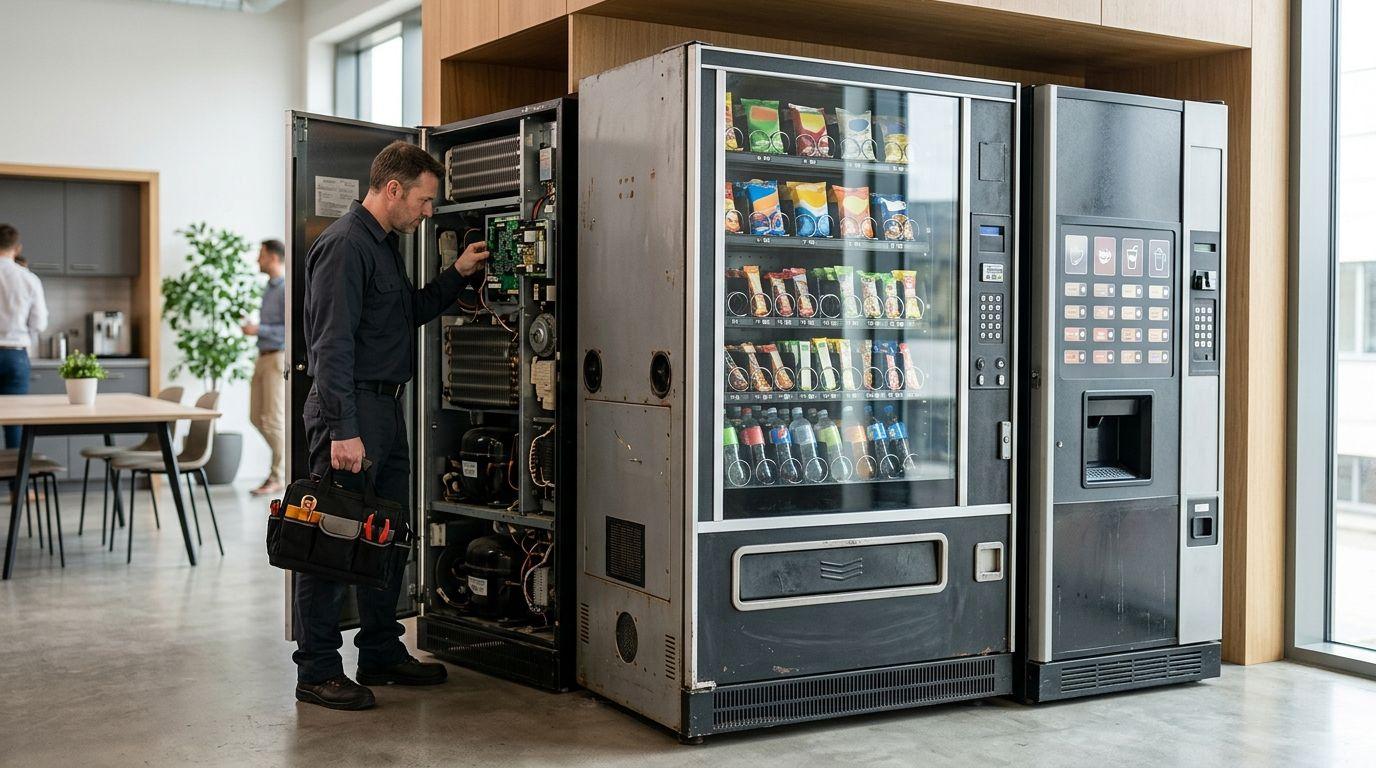
Vending machine equipment does not have one fixed service life. Its usable lifespan ends when the cabinet, refrigeration system, controls, payment hardware, or replacement-parts supply can no longer meet the location's needs at an acceptable level of downtime. In 2026, evaluate those systems separately instead of replacing equipment based only on its manufacture date.
TL;DR- Vending machine equipment lifespan has no universal cutoff, condition and serviceability matter more than calendar age.
- In 2026, inspect the cabinet, cooling system, controls, payment hardware, and parts support separately.
- Maintenance records reveal more than appearance when you assess used vending equipment.
- The Vending Club is a neutral resource for U.S. vending operators researching equipment and route decisions.
Why this matters
Equipment age affects repair planning, location reliability, and the amount of working capital tied up in a route. An operator who retires every machine at an arbitrary age can discard serviceable assets. An operator who keeps every machine until complete failure can face repeated service calls, lost sales, and strained location relationships.
Equipment planning should sit inside the broader vending route management process. Maintenance records, machine-level sales, recurring faults, parts access, and location requirements should all inform the decision.
The Vending Club is a neutral vending industry resource for U.S. operators who need practical equipment questions, record checklists, and supplier research in one place. It does not sell machines or provide vending service, so operators still need to confirm specifications and support terms with the manufacturer, seller, or technician involved.
How long does vending machine equipment typically last?
A vending machine remains usable while it can dispense reliably, protect products, accept the required payment methods, and be repaired with available parts. The cabinet can remain sound after internal systems become uneconomical or impractical to support. Conversely, a newer-looking machine can be a poor purchase if it has recurring cooling faults, unsupported controls, or undocumented modifications.
Use this 5-system condition check to estimate service life in 2026:
| System | What to inspect | Evidence to request | Replacement warning |
|---|---|---|---|
| Cabinet and enclosure | Rust, door alignment, water entry, broken mounts | Photos, inspection notes, repair history | Structural damage prevents secure operation |
| Refrigeration | Temperature stability, compressor behavior, seals, airflow | Temperature logs and service invoices | Repeated cooling faults or unavailable components |
| Controls and power | Display, controller, wiring, power supply, error history | Model numbers and diagnostic records | Unsupported board or recurring electrical failure |
| Payment equipment | Coin, bill, card, and mobile-payment operation | Reader model, processor compatibility, update status | Required payment methods cannot be supported |
| Delivery system | Motors, spirals, sensors, belts, doors, or elevator | Vend tests and parts history | Frequent failed vends despite adjustment and repair |
This framework does not produce a universal retirement date. It produces a condition-based decision that you can document and repeat across a fleet.
Cabinet and enclosure
The cabinet determines whether the machine can stay secure, dry, stable, and presentable at its location. Surface wear is mainly a refurbishment question. Corrosion around the base, damaged hinges, a distorted door, water entry, or compromised locks can become a service-life issue because they affect security and the systems mounted inside.
Inspect the machine with the door open and closed. Check whether the door seals evenly, whether shelves and payment hardware sit square, and whether previous repairs changed the frame. Fresh paint should not substitute for an inspection of the metal beneath it.
Refrigeration system
For refrigerated snack, beverage, fresh-food, and frozen equipment, cooling condition can decide whether the machine remains practical to operate. The useful evidence is not a seller's statement that the unit gets cold. You need to know whether it reaches and maintains the required temperature under normal operation and whether the cooling system has a pattern of repeat repairs.
Check the compressor, condenser, fans, seals, airflow path, temperature controls, and available diagnostic history. A single repair does not automatically end a machine's life. Repeated failures, long parts delays, or a repair that still leaves unstable temperatures change the decision.
Controls, wiring, and power
A machine can have a solid cabinet and working motors but still be difficult to keep in service if its controller, display, power supply, or wiring is unsupported. Unlabeled wiring changes and improvised repairs add uncertainty because the next technician must first determine what was altered.
Record the model and revision of the controller, not just the machine model. Confirm whether manuals, diagnostic procedures, replacement boards, and compatible peripherals remain available in 2026. Parts support is part of equipment lifespan because an unrepairable control failure can retire an otherwise usable machine.
Payment equipment
Payment hardware follows a different replacement cycle from the cabinet. Coin mechanisms, bill validators, card readers, antennas, and payment interfaces can be repaired or replaced independently, but only when compatible hardware and processing support remain available.
Confirm which payment methods the location requires and whether the current machine can support them without uncertain modifications. Check the reader model, connection type, controller compatibility, processing arrangement, and update status. Do not assume that a powered-on display proves the full transaction path works.
Motors and delivery hardware
Delivery components differ across snack spirals, beverage stacks, lockers, elevators, conveyors, and other machine formats. Test the actual mechanism installed rather than applying one inspection checklist to every machine.
A successful single vend is not a complete test. Run each selection, observe whether sensors register correctly, and inspect for bent shelves, damaged motors, worn belts, misaligned gates, or makeshift adjustments. Recurring failed vends can turn a mechanically repairable machine into a poor fit for a demanding location.
Why vending machine equipment lifespan varies
Two machines made at the same time can have very different remaining lives. The difference usually comes from operating conditions, maintenance quality, repair history, and supportability.
- Environment: Heat, moisture, dust, pests, and poor ventilation place different demands on electrical and refrigeration components. Record where the machine operated, not just where it is being sold.
- Workload: Transaction volume and product weight affect motors, doors, delivery systems, and payment devices. Compare prior use with the demands of the proposed location.
- Maintenance: Cleaning, adjustment, and timely repair prevent minor faults from becoming larger failures. A verbal claim of regular maintenance is weaker than dated service records.
- Repair quality: Correct parts and documented work make future service easier. Unlabeled wiring, improvised brackets, and bypassed sensors introduce problems that appearance alone will not show.
- Parts availability: A machine can be repairable in theory but impractical to support if the needed board, motor, sensor, or refrigeration component is no longer accessible.
- Location requirements: A machine may still function but no longer suit the account's product mix, accessibility needs, reporting expectations, or accepted payment methods.
In 2026, age should be one field in the equipment record, not the final verdict. Condition, fault frequency, service time, and support access produce a more useful answer.
How do you estimate a machine's remaining service life?
Use the same process for equipment you already own and equipment you are considering buying. A consistent inspection prevents appearance, seller language, or one successful test from carrying too much weight.
1. Identify the exact equipment
Record the manufacturer, model, serial number, controller revision, refrigeration details, and installed payment hardware. Photograph every identification plate before discussing parts or support with a technician or supplier.
A model family name is not always specific enough. Revisions can use different control boards, harnesses, or peripheral connections, so the serial number and installed components matter.
2. Build the service history
Request invoices, technician notes, fault records, refurbishment details, and a list of replaced parts. Separate routine work from repeat repairs. A documented replacement can reduce uncertainty, while a recurring fault without a confirmed cause increases it.
If records are missing, treat the history as unknown. Do not turn a seller's memory into a documented service record. The Vending Club's vending machine equipment resources emphasize asking for evidence that can be checked rather than relying on broad condition labels.
3. Test every operating function
Power the machine through a normal startup. Test each selection, product sensor, display control, lock, light, payment device, and delivery method. Refrigerated equipment also needs a temperature-performance check under realistic operating conditions.
Record failures by selection and subsystem. A short list of adjustment items is different from faults spread across the controller, payment system, and refrigeration unit.
4. Check parts and technical support
List the components that would stop operation if they failed. Then confirm whether replacements, repair services, manuals, and knowledgeable technicians are available for the exact version installed.
This step converts a vague question about age into an operational question: If the machine fails next month, can you diagnose and return it to service without an open-ended search for parts?
5. Match the machine to the location
A machine that works in a low-demand setting may not fit a high-volume account or a location with strict reporting, product, payment, or service requirements. Define those requirements before deciding whether the equipment has useful life remaining.
Consider capacity, delivery format, temperature needs, payment methods, communication signal, physical access, and the service response expected by the account. Equipment life is partly about fitness for the assigned job.
6. Compare the 3 service paths
Do not reduce the decision to repair or discard. Keeping the machine as-is, refurbishing selected systems, and replacing the unit are separate paths with different tradeoffs.
| Service path | A fit when | Advantage | Limitation |
|---|---|---|---|
| Keep in service | Core systems work and faults are isolated | Avoids unnecessary replacement | Requires continued monitoring |
| Refurbish | Cabinet is sound and identified components need renewal | Targets the systems causing risk | Scope and workmanship must be documented |
| Replace | Multiple critical systems are unsupported or unreliable | Resets several equipment risks together | Requires installation, setup, and asset planning |
There may be other repair, refurbishment, leasing, and replacement approaches not covered here. Confirm the available choices with qualified technicians, sellers, and service providers before committing equipment to a location.
Review vending operator resources
Browse practical guides, calculators, templates, and directory information for U.S. vending operators.
Get the templatesIs an older vending machine automatically unreliable?
No. Calendar age does not establish current condition, repair quality, or parts support. An older machine with documented maintenance and available components can be easier to plan around than a newer unit with recurring faults and no service history.
The opposite is also true. A clean cabinet and a recent payment reader do not prove that the cooling system, controller, motors, or wiring are dependable. Inspect the entire machine and keep the findings in the asset record.
When should you refurbish instead of replace?
Refurbishment is a fit when the cabinet and basic platform remain sound, the problem components can be identified, and compatible parts and service are available. The work should have a written scope that distinguishes replacement, rebuilding, cleaning, testing, and cosmetic changes.
Replacement deserves consideration when faults cross several critical systems, required components are unsupported, or repair history shows the same issue returning. The decision should include expected downtime and location requirements, not just the latest repair invoice.
What records should you keep after the machine enters service?
Keep identification details, installation date, location history, service notes, parts replaced, downtime events, payment-hardware changes, and unresolved faults. Record what happened, what was tested, who performed the work, and whether the fault returned.
Consistent records turn future replacement planning into a comparison across machines. They also help a technician see patterns without starting every visit from zero in 2026.
One last thing
A machine does not need to fail completely before it reaches the end of its useful life at a specific location. It can still vend products yet lack the payment support, capacity, reporting, accessibility, temperature control, or serviceability that the account requires.
That does not always mean the machine has no remaining value. It may fit another location, become a refurbishment candidate, or provide documented reusable components. In 2026, The Vending Club provides a neutral starting point for researching those choices, while the final equipment decision belongs with the operator, location, seller, and qualified service professionals involved.
Get new vending guides in your inbox
The Vending Club publishes new operator guides most days. The free General Updates newsletter goes out every Friday with the week's new articles, and nothing else. You choose the updates you want, we confirm by email before sending anything, and you can unsubscribe at any time.
Related guides
- How much downtime is normal for a vending machine each month
- What to check before buying a vending machine online
Sources
- The Vending Club, "How to Verify Vending Industry Claims and Statistics": https://www.thevendingclub.net/blog/how-to-verify-vending-industry-claims-and-statistics
- The Vending Club, "What Records to Request When Buying Used Vending Equipment": https://www.thevendingclub.net/blog/what-records-to-request-when-buying-used-vending-equipment
Common questions
- How long is the typical vending machine equipment lifespan?
Vending machine equipment has no universal service-life cutoff. In 2026, its usable life depends on cabinet condition, refrigeration, controls, payment compatibility, delivery reliability, maintenance history, and parts support.
- How do you choose whether to repair or replace a vending machine?
Compare the condition of all critical systems, the pattern of past faults, parts availability, expected downtime, and the requirements of the location. One repairable fault supports a different decision from several recurring or unsupported failures.
- Does a refurbished vending machine have less useful life remaining?
Not necessarily. Remaining life depends on what was inspected, repaired, rebuilt, or replaced, so request an itemized refurbishment record instead of relying on the refurbished label.
- How do you inspect a used vending machine before buying it?
Identify the exact model and components, review service records, test every selection and payment method, inspect the cabinet and wiring, and confirm parts support. Refrigerated equipment also needs a realistic temperature-performance check.
- Can payment hardware shorten a vending machine's useful life?
Payment requirements can make equipment unsuitable for a location even when the cabinet and delivery system still work. Confirm controller compatibility, reader support, connectivity, and the payment methods required by the account.
- What maintenance records matter for vending equipment?
Keep dated service notes, fault descriptions, parts replaced, refrigeration work, payment changes, downtime events, and unresolved issues. Records should distinguish recurring faults from isolated repairs.
- How does telemetry affect equipment replacement planning?
Telemetry can add machine-level sales, inventory, and operating alerts to the decision when the installed system supports those functions. Operators should compare those records with technician findings and location requirements rather than using one data point alone.
- Should every machine on a route follow the same replacement schedule?
No. Each machine has a different environment, workload, service history, configuration, and location requirement, so a condition-based review is more useful than one fleet-wide retirement age.