

Vending Operators8 min read
On this page
Placing a vending machine on land or inside a building owned by a federal, state, or local government is legal in 2026, but only when the operator holds a permit, lease, license, or concession contract from whoever controls that property. The vending machine itself is never the legal problem. The missing paperwork behind the placement is.
TL;DR- Vending machines on public property are legal with the right permit, lease, or concession contract from the property owner.
- Federal buildings fall under the Randolph-Sheppard Act, which gives priority to state-licensed blind vendors.
- Cities, school districts, and transit authorities each run their own permit or bid process; there's no single national rule.
- ADA accessibility standards apply to machines placed in any building open to the public, regardless of who owns it.
- Machines installed without authorization can be removed by the property owner, even after months of operation.
Why this matters
"Public property" is not one category with one rulebook. A federal courthouse, a state DMV office, a city park, a public school cafeteria, and a subway platform are all government-owned, but each one answers to a different agency with its own process. An operator who treats them as interchangeable can end up with a removed machine, a fine, or a contract fight over a spot that was never actually available.
The The Vending Club directory lists operator tools built for exactly this kind of ownership question, useful before any money changes hands on a machine or a location.
Is it legal to place a vending machine on public property?
Yes, in most cases, but legality depends entirely on getting authorization from the specific government entity that owns or manages the property before the machine goes in. Federal buildings, state offices, city parks, school districts, and transit authorities each run separate approval processes, and none of them treat a vending machine as something an operator can simply drop off.
| Property type | Who controls access | Typical path to place a machine | Blind vendor priority applies |
|---|---|---|---|
| Federal buildings, VA facilities, military bases | GSA or the federal agency occupying the building | State Licensing Agency application under the Randolph-Sheppard set-aside | Yes, in most cases |
| State-owned buildings (DMV offices, state agencies) | State facilities office or State Licensing Agency | State Business Enterprise Program application, or a direct permit | Often, depending on the state |
| City or county property (parks, city hall, sidewalks) | City or county government | Vendor permit, franchise agreement, or competitive RFP | No |
| Public school property | School district | Food service or vending contract awarded through district procurement | No |
| Transit stations and airports | Transit authority or airport authority | Concession contract, usually competitively bid | No |
Other property types exist beyond what's listed here, including hospital systems, public housing authorities, and port authorities, each with its own process.
Federal property: The Randolph-Sheppard Act sets the baseline
The Randolph-Sheppard Act, passed in 1936, gives blind individuals licensed through a state agency priority to operate vending facilities, including vending machines, on federal property. That covers federal office buildings, VA hospitals, and military installations, and it runs through a state's designated licensing agency rather than a direct application to the building itself.
A private operator who is not part of that licensing structure generally cannot bypass the set-aside to place machines in a covered federal building. The General Services Administration (GSA) manages much of the federal real estate where this applies, and the specific building's facilities office is the starting point for confirming whether a location is covered.
State and local government property: Permits, RFPs, and franchise agreements
Many states run a parallel program, often called a Business Enterprise Program, that extends the same blind-vendor priority to state-owned buildings like DMV offices and state agency headquarters. Outside of that program, state and local governments generally control vending placement through permits, franchise agreements, or a competitive request-for-proposal (RFP) process, not through open enrollment.
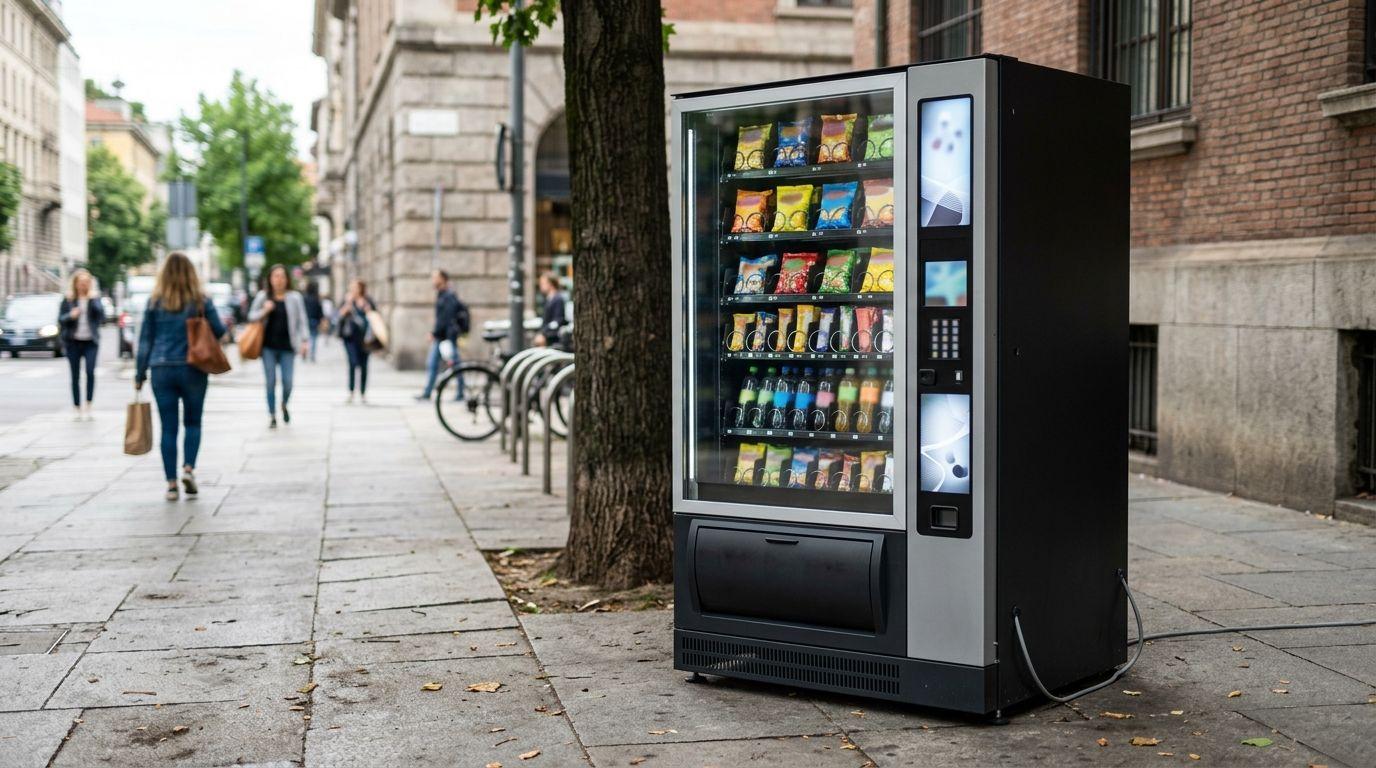
City and county rules vary block to block in some cases. A vending machine on a public sidewalk, in a park, or inside city hall usually needs a specific vendor permit, and some municipalities restrict or ban stationary vending machines on public sidewalks in favor of licensed mobile carts. A general business license from the Small Business Administration's guidance on permits is a starting point, but it does not substitute for the property-specific permit a city or county requires.
Revenue-share terms, insurance minimums, and removal conditions are usually spelled out in the agreement the city or county issues, and those terms differ from one jurisdiction to the next.
School and transit property: Separate rules apply
Public schools award vending contracts through district procurement, not through a direct pitch to an individual school. If the school participates in the National School Lunch Program, vending machines accessible to students during the school day also need to meet USDA's Smart Snacks nutrition standards, which govern calorie, sodium, and fat content for items sold in that window.
Transit stations and airports typically run vending through concession contracts awarded by the transit or airport authority, usually on a competitive basis with multi-year terms. That process sits apart from the Randolph-Sheppard set-aside used in federal office buildings, since most transit and airport authorities are state or municipal, not federal.
ADA accessibility applies regardless of ownership
Any vending machine placed in a building open to the public needs to meet accessibility requirements under the ADA, whether the building is federal, state, city, or school property. The 2010 ADA Standards for Accessible Design cap the highest reachable operable control on a machine at 48 inches from the floor, with 15 inches as the low end of the reach range, so this applies the same way in a federal courthouse and a city hall lobby.
A fuller breakdown of the reach range, clear floor space, and knee clearance rules for vending machines in public buildings is covered in ADA rules for vending machines in public buildings.
How to confirm you can legally place a machine on public property
- Identify the exact owner of the parcel or building. City, county, state agency, school district, and federal agency each have a different office to contact.
- Reach out to that entity's facilities, procurement, or concessions office directly. Vending permissions rarely sit with a general information line.
- Ask whether the location falls under a competitive bid process, a direct permit, or a blind-vendor priority program.
- Confirm what business license, health permit, and insurance coverage the entity requires before any equipment is delivered.
- Get the agreement in writing, including term length, revenue share, and the conditions under which the machine can be required to be removed.
How to verify a proposed vending location walks through the ownership and traffic checks that matter before signing any placement agreement, public or private.
Why the legal path varies so much
- Which government entity owns or manages the property. Federal, state, city, county, school district, and transit authority rules do not overlap.
- Whether the Randolph-Sheppard Act or a state Business Enterprise Program applies. These programs create a legal priority that a private operator cannot outbid.
- Whether the entity requires a competitive RFP or accepts direct permit applications. Some cities issue permits on request; others only award vending rights through periodic bids.
- Local business license, food handler, and health permit rules. These sit separately from the property permit itself and vary by city and county.
- ADA accessibility requirements for the specific building. A machine that clears one building's accessibility review does not automatically clear another's.
- Revenue-share, insurance, and liability terms set by the property manager. These are negotiated per contract, not standardized across government levels.
Verify the location before you sign
Check ownership and permit requirements first.
See license and permit rules by stateDo you need a permit to place a vending machine on a public sidewalk?
Most cities require a permit before a vending machine can sit on a public sidewalk, and some ban stationary machines from sidewalks entirely in favor of licensed mobile carts. Check the specific municipal code for the city where the sidewalk sits, since sidewalk vending rules can differ from one block or district to the next within the same city.
Does the Randolph-Sheppard Act apply to state or city buildings too?
The Randolph-Sheppard Act itself covers federal property only, not state or city buildings. Many states run a parallel Business Enterprise Program that extends the same blind-vendor priority to state-owned buildings, but city and county buildings are not covered by either program unless the local government has adopted its own similar policy.
Can a private operator place a vending machine in a public school?
Private operators can place vending machines in public schools, but the contract is awarded through the school district's procurement process, not through a direct pitch to a single school. Machines accessible to students during the school day also need to meet USDA Smart Snacks nutrition standards if the school participates in federal meal programs.
One last thing
National parks and other federally managed recreation land don't run through the same Randolph-Sheppard set-aside used in federal office buildings. Vending and food service in national parks typically goes through the National Park Service's concessions contract process instead, a completely separate application path from a standard federal office building. An operator who assumes all federal land works the same way can spend months applying through the wrong door.
Get new vending guides in your inbox
The Vending Club publishes new operator guides most days. The free General Updates newsletter goes out every Friday with the week's new articles, and nothing else. You choose the updates you want, we confirm by email before sending anything, and you can unsubscribe at any time.
Related guides
Sources
- U.S. Department of Education, Rehabilitation Services Administration, "Randolph-Sheppard Program": https://rsa.ed.gov/
- U.S. General Services Administration, homepage: https://www.gsa.gov/
- U.S. Department of Justice, ADA.gov, "ADA Standards for Accessible Design": https://www.ada.gov/
- U.S. Small Business Administration, "Apply for Licenses and Permits": https://www.sba.gov/business-guide/launch-your-business/apply-licenses-permits
- USDA Food and Nutrition Service, "Smart Snacks in School": https://www.fns.usda.gov/cn/smart-snacks-school
- National Park Service, "Concessions": https://www.nps.gov/subjects/concessions/index.htm
Common questions
- Is it legal to put a vending machine on public property in 2026?
Yes, it's legal in 2026 when the operator has a permit, lease, license, or concession contract from the government entity that controls the property. Placing a machine without that authorization is what creates the legal problem, not the vending machine itself.
- How do you find out who owns a piece of public property?
Start with the local assessor's office, city clerk, or county recorder, since property ownership records are public in most jurisdictions. For federal buildings, the General Services Administration or the occupying agency's facilities office is the right contact instead.
- Does ADA apply to vending machines on public property?
Yes, ADA accessibility standards apply to vending machines placed in any building open to the public, regardless of whether it's federal, state, city, or school property. The 2010 ADA Standards set a reach range of 15 to 48 inches for operable controls on the machine.
- What is the Randolph-Sheppard Act?
The Randolph-Sheppard Act, passed in 1936, gives blind individuals licensed through a state agency priority to operate vending facilities on federal property. It runs through a state licensing agency rather than a direct application to the building.
- Can a private company operate a vending machine in a federal building?
It depends on whether the building falls under the Randolph-Sheppard set-aside, which prioritizes state-licensed blind vendors for federal property. Where the set-aside applies, a private operator outside that licensing structure generally cannot place a competing machine.
- Do public schools have special rules for vending machine contents?
Yes, schools participating in the National School Lunch Program must follow USDA's Smart Snacks nutrition standards for items sold to students during the school day. Contracts to place the machines are still awarded through district procurement, separate from the nutrition rules.
- How do you get a permit for a vending machine on city property?
Contact the specific city or county department that manages the property, such as parks and recreation or facilities management, since permit requirements vary by department and location. Some cities require a competitive bid instead of a direct permit, so confirm the process before applying.